If you have just started learning about SEO, you have probably heard the term link building many times. Many website owners focus only on writing blogs and optimizing their pages, but they often forget about link building. Without it, it can be difficult to improve your website’s authority and search engine rankings.
So, what exactly is link building? Is it really an important part of SEO?
The answer is yes.
Link building is one of the most important parts of Off-Page SEO. It helps search engines understand that other websites trust your content. The more high-quality websites that link to your pages, the more trustworthy your website appears.
In this blog, we will explain link building in simple words, why it matters, how it works, and the best ways to build quality backlinks.
What Is Link Building?
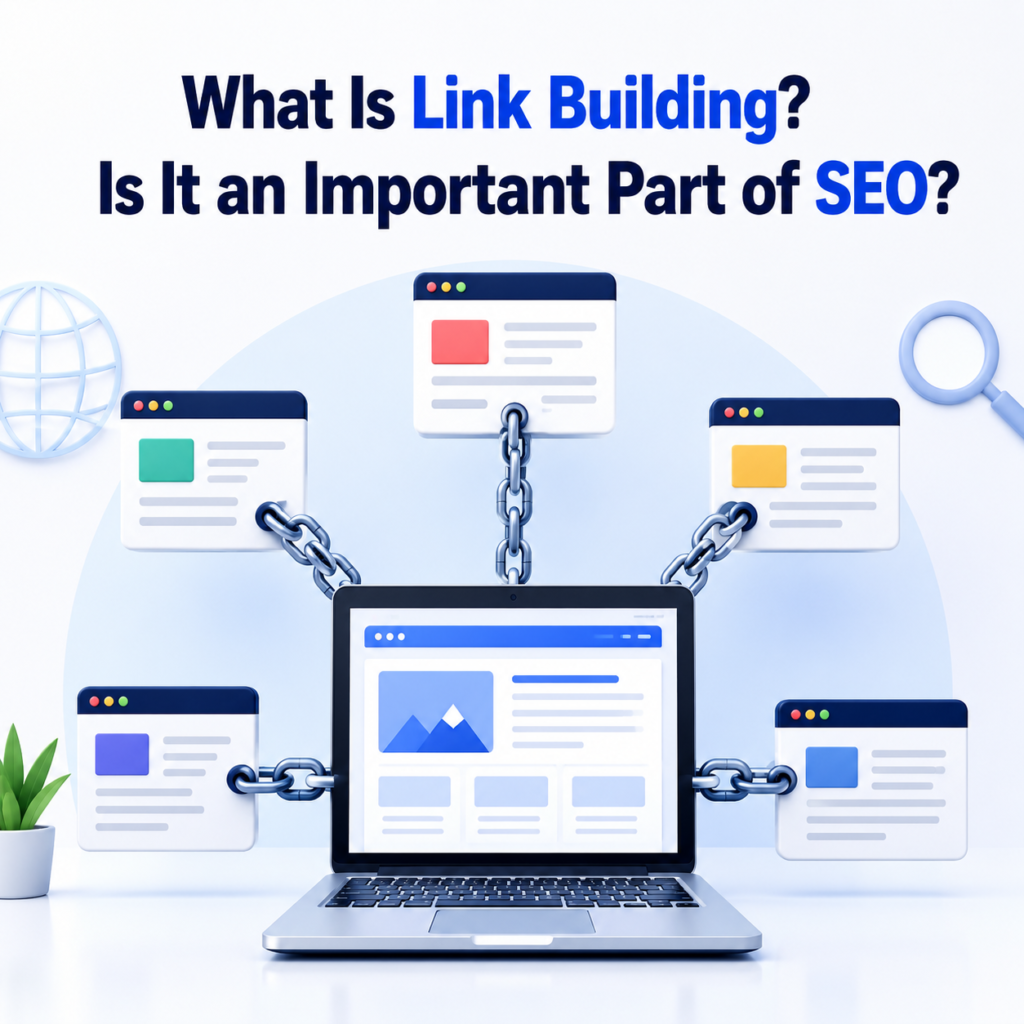
Link building is the process of getting links from other websites to your own website. These links are known as backlinks.
For example, if another website writes an article and includes a link to your blog, that is called a backlink. These backlinks are interpreted by search engines like Google as an indication that your material is quality and helpful.
Think of it like a recommendation. If many trusted websites recommend your content, Google is more likely to trust your website too.
Another name for link building is off-page SEO.
SEO is mainly divided into three parts:
- On-Page SEO
- Technical SEO
- Off-Page SEO
One of the most important aspects of off-page SEO is link building.
While On-Page SEO focuses on optimizing your own website, Off-Page SEO focuses on improving your website’s reputation outside your website.
Off-Page SEO includes activities like:
- Building backlinks
- Guest posting
- Brand mentions
- Social sharing
- Digital PR
- Business directory submissions
Link building is the most important of these tasks since high-quality backlinks boost your website’s authority and raise its likelihood of appearing higher in search results.
Why Is Link Building Important?
Google wants to show users the best and most trustworthy websites.
One way Google measures trust is by looking at backlinks.
Google recognizes the value of your material when trustworthy websites link to it.
Here are some major benefits of link building.
Improves Search Engine Rankings
Good backlinks can help your pages rank higher for important keywords.
Although backlinks are not the only ranking factor, they remain one of the strongest signals used by search engines.
Increases Website Authority
Your website gains authority when reputable websites connect to your content.
A higher authority website usually performs better in search results than a website with very few quality backlinks.
Brings More Organic Traffic
Higher rankings usually lead to more visitors.
As your pages move closer to the top of Google search results, more people are likely to click on your website.
Helps Google Discover New Pages
Links are used by search engine bots to find fresh information.
If another website links to your newly published blog, Google may find and index it more quickly.
Builds Trust
Visitors often trust websites that are mentioned by other reliable websites.
Backlinks can improve both your SEO and your brand reputation.
What Is a Backlink?
A backlink is a simple link from another website to your website.
For example, imagine a marketing blog writes an article about SEO tips and links to your article about keyword research.
That link becomes a backlink for your website.
Not every backlink has the same value.
A backlink from a trusted and popular website is much more valuable than several backlinks from low-quality websites.
Types of Backlinks
Understanding different types of backlinks helps you focus on quality instead of quantity.
Natural Backlinks
These are earned naturally when someone likes your content and links to it without you asking.
These are considered the best backlinks.
Manual Backlinks
These backlinks are earned through outreach.
For example, you contact another website owner and request them to link to your useful article.
Guest posting is a common example of manual link building.
Self-Created Backlinks
These are backlinks you create yourself by submitting your website to directories, forums, blog comments, or profile pages.
These backlinks should be handled with caution because producing too many low-quality links will affect your SEO.
What Makes a Good Backlink?
Not every backlink helps your website.
A good backlink usually has these qualities.
Comes From a Trusted Website
Links from well-known and trusted websites carry more value.
Is Relevant
A backlink from a website in your industry is more valuable than one from an unrelated website.
For example, if your website is about SEO, getting a backlink from a digital marketing website is much better than getting one from an unrelated entertainment website.
Uses Natural Anchor Text
Anchor text is the clickable text in a link.
It should sound natural and fit within the content.
Appears Inside Quality Content
Links placed inside informative articles usually provide more value than links hidden in footers or sidebars.
White Hat vs Black Hat Link Building
Link construction can be done in two ways.
White Hat Link Building
White Hat techniques follow Google’s guidelines.
These methods include:
- Writing helpful content
- Guest posting
- Building relationships
- Digital PR
- Creating useful resources
- Earning natural backlinks
These techniques are safe and provide long-term SEO benefits.
Black Hat Link Building
Black Hat techniques try to manipulate search rankings.
Examples include:
- Buying backlinks
- Link farms
- Spam comments
- Automated backlink software
- Private Blog Networks (PBNs)
Google can penalize websites that use these methods.
It is always better to focus on quality rather than shortcuts.
Best Link Building Strategies
If you want to improve your website’s SEO, here are some effective link-building methods.
Create High-Quality Content
People naturally link to useful content.
Write detailed guides, tutorials, case studies, research articles, and helpful blog posts that solve real problems.
Guest Posting
Write articles for other trusted websites in your niche.
In return, you usually receive a backlink to your own website.
Guest posting is one of the most popular Off-Page SEO techniques.
Build Resource Pages
Create valuable resources such as:
- SEO checklists
- Free templates
- Tools
- Infographics
- Beginner guides
Useful resources attract backlinks over time.
Broken Link Building
Find broken links on other websites and suggest your own relevant content as a replacement.
This helps both website owners and your SEO.
Reach Out to Website Owners
If your content adds value, you can politely contact bloggers or website owners and let them know about your article.
Sometimes they may link to it if it benefits their readers.
Link Building Mistakes to Avoid
Many beginners make simple link-building mistakes that can hurt their SEO. Try to avoid these common problems:
Buying backlinks from unknown or untrusted websites.
Creating too many low-quality backlinks in a short time.
Using the same keyword as anchor text everywhere.
Posting spam comments only to get backlinks.
Ignoring the quality of your content.
Getting backlinks from websites that are not related to your topic.
Focusing on the number of backlinks instead of their quality.
Remember, one high-quality backlink can be more valuable than many low-quality links.
How Long Does Link Building Take?
Link building is not a one-time task.
It is an ongoing process.
Some backlinks may improve your rankings within a few weeks, while others may take several months to show results.
The key is to stay consistent.
Continue publishing valuable content, building relationships, and earning natural backlinks over time.
Is Link Building Still Important in 2026?
Yes, absolutely.
Google’s algorithms have become smarter, but backlinks are still one of the strongest ranking factors.
The difference today is that Google values quality over quantity.
A few relevant backlinks from trusted websites can provide better results than hundreds of low-quality links.
That is why modern SEO focuses on earning links naturally instead of trying to manipulate search rankings.
Final Thoughts
Known as Off-Page SEO, link building is a crucial component of SEO. It tells search engines that your website is reliable, worthwhile, and deserving of user recommendations.
However, the objective of successful link building is not to obtain as many backlinks as possible.
In order to get connections from reliable and pertinent websites, it entails creating helpful material that people genuinely want to share.
Strong On-Page SEO, appropriate Technical SEO, and efficient Off-Page SEO through high-quality link building will increase the likelihood that your website will rank higher in search results and draw in more organic traffic.
Be patient, stay consistent, and always focus on quality. Over time, your efforts will help build a stronger online presence and improve your website’s long-term SEO performance.