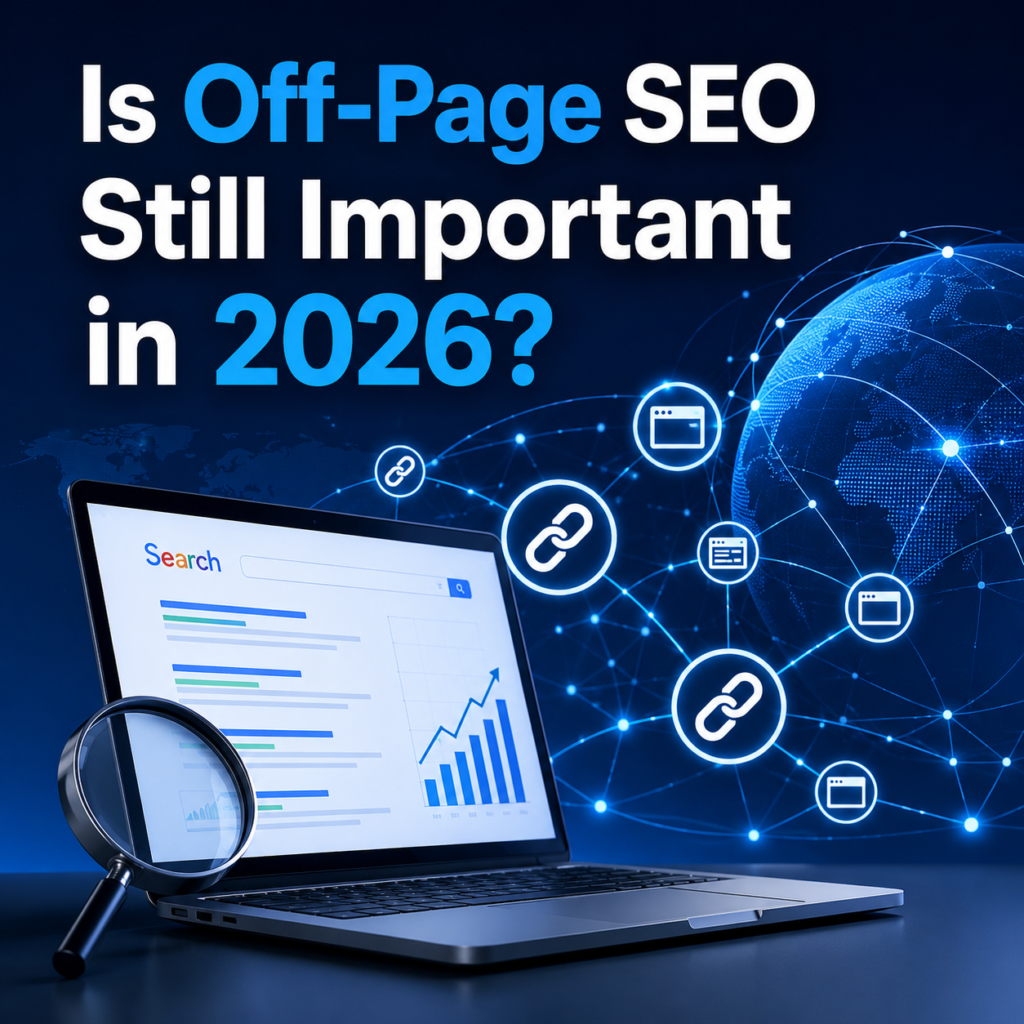
If you’ve spent any time reading about SEO, you’ve probably come across the term Off-Page SEO. And you might be wondering — with all the changes Google has made over the years — does it even matter anymore in 2026?
Short answer: yes, it absolutely still matters. But how you do it has changed a lot.
Let’s talk through this in plain, simple terms.
What Is Off-Page SEO, Really?
Here’s an easy way to think about it. On-Page SEO is everything you control inside your own website — your content, your headings, your titles. Off-Page SEO is everything that happens outside your website that still affects how much Google trusts you.
This includes things like:
- Other websites linking back to you (called backlinks)
- Writing guest posts on other relevant sites
- Getting mentioned on social media or other blogs
- People leaving genuine reviews about your business
- Building a good reputation online in general
Basically, On-Page SEO is what you say about yourself. Off-Page SEO is what other people say about you.
Why Does This Still Matter?
Let’s use a simple example. Imagine two websites publish the exact same helpful article about healthy eating.
Website A has been mentioned by a few respected health blogs, and other sites occasionally link back to it because people trust its content.
Website B has none of that. Nobody talks about it. No one links to it.
Who do you think Google is going to trust more?
Website A, obviously. That’s the whole idea behind Off-Page SEO. Google can’t just take your word for it that your content is good — it looks at how other people and websites treat you as extra proof.
Here’s what strong Off-Page SEO actually does for you:
It builds authority. When trusted websites link to you, it’s like they’re vouching for you. The more genuine vouches you collect, the stronger your website looks in Google’s eyes.
It helps you rank higher. Good content alone isn’t always enough anymore. Off-Page SEO gives your pages an extra push that helps them move up in search results over time.
It brings in more visitors. Higher rankings usually mean more clicks, which means more free, organic traffic — the kind of visitors who didn’t cost you a single rupee in advertising.
It builds real trust. If someone finds your brand mentioned somewhere they already trust, they’re much more likely to trust you too.
It helps Google find your new content faster. When another website links to your latest post, it can help search engines discover and index it more quickly.
It grows brand awareness. Every mention — even without a link — adds up. Even if someone doesn’t click right away, they might remember your name and come back later.
It’s especially important for local businesses. If you run a local business, things like your Google Business Profile, customer reviews, and local directory listings can make a big difference in how easily nearby customers find you.
So What Actually Works in 2026?
This is where things have changed. A lot of the old “tricks” people used to use for Off-Page SEO don’t work anymore — and some can actually hurt you.
Aim for a few really good backlinks, not hundreds of random ones. One link from a trusted, relevant website is worth far more than fifty links from random, unrelated sites.
Write real guest posts. If you’re contributing to another blog, actually write something useful. Don’t just stuff it with links and call it a day.
Show up on social media consistently. Sharing your content regularly on platforms like Instagram, Facebook, or LinkedIn won’t directly boost your ranking, but it increases the chance that people notice you and link to you naturally.
Ask for honest reviews. If you run a business, genuine customer reviews build real trust — both with customers and with Google.
Join conversations in your niche. Answer questions on forums or community sites where people are already talking about your topic. Just make sure you’re actually being helpful, not just dropping your link everywhere.
What You Should Avoid
Some shortcuts might seem tempting, but they usually backfire:
- Buying backlinks from shady, low-quality websites
- Using automated tools that mass-create backlinks
- Submitting your website to hundreds of random directories just to get links
- Posting the exact same guest article on multiple sites
- Spamming blog comments or forums with links
- Using “private blog networks,” which are basically fake link farms
Google has gotten really good at spotting these patterns. What used to work in 2015 can actually damage your website today. If your backlinks look artificial or forced, it can hurt you more than having no extra backlinks at all.
Is On-Page or Off-Page SEO More Important?
Honestly, this is a bit of a trick question — because you really need both.
On-Page SEO helps Google understand your content. Off-Page SEO helps Google trust it. Without good content, backlinks don’t mean much. But without any backlinks or mentions, even great content can struggle to get noticed.
How Long Does It Take to See Results?
Here’s the honest truth: Off-Page SEO is slow. There’s no shortcut that skips this. Most websites start noticing real improvement after a few months of steady, genuine effort — publishing good content, connecting with people in your niche, and earning links naturally instead of forcing them.
The websites that stick with it patiently, doing things the honest way, are usually the ones that see results that actually last.
Final Thoughts
So, is Off-Page SEO still important in 2026? Yes, without a doubt.
But it’s not about chasing as many backlinks or mentions as you can grab. It’s about slowly building a genuine, trustworthy reputation — the kind that can’t be faked or rushed.
If you combine good content, solid On-Page SEO, and a patient, honest approach to Off-Page SEO, you’re setting your website up for the kind of long-term growth that actually sticks around.