Relationship Between Nutrients and Calories: A Simple Guide to Healthy Eating
 Shruti Thakral
October 8, 2026
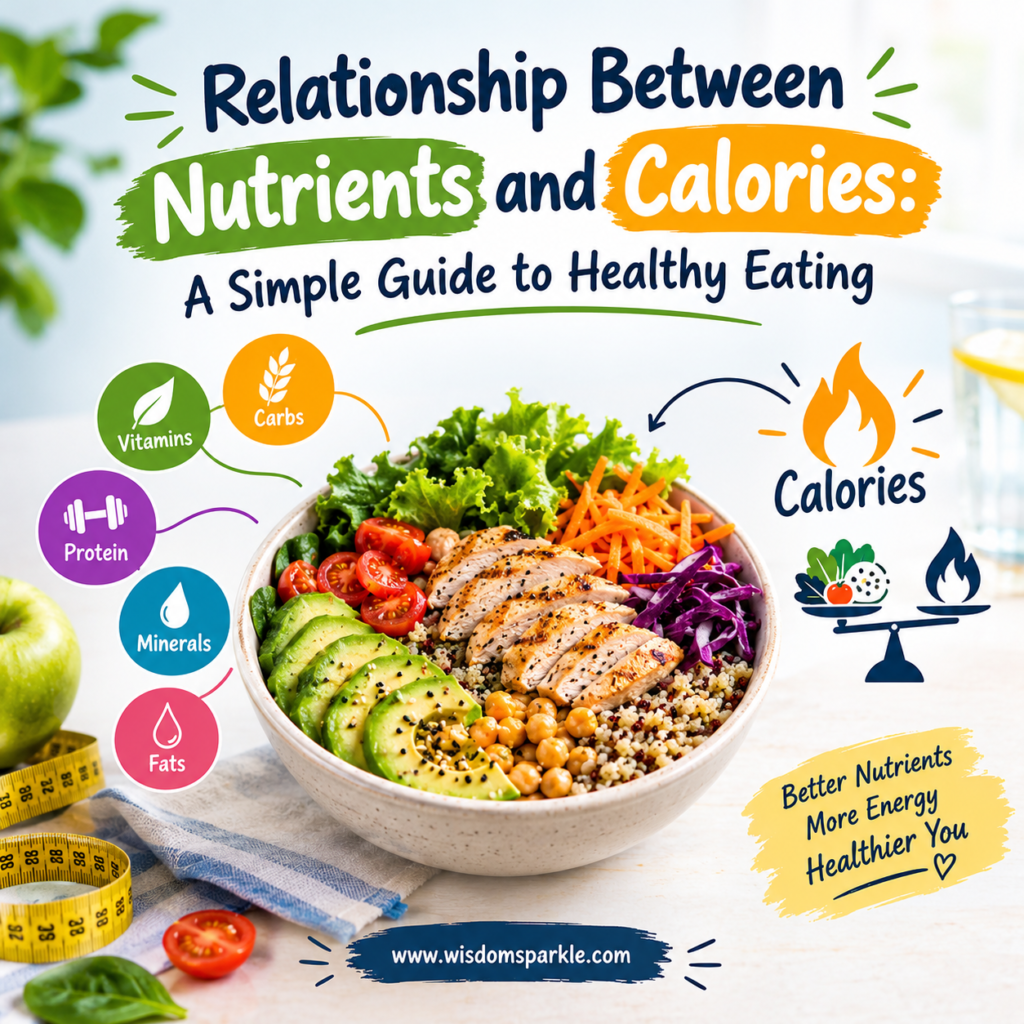
Food gives our body the energy and nutrients it needs every day. We need food to work, study, exercise, think, sleep, and stay active. But have you ever wondered about the relationship between nutrients and calories?
Calories and nutrients are both important parts of our diet. However, they are not the same thing. Calories tell us how much energy a food can provide, while nutrients help our body grow, repair itself, and work properly.
Understanding this simple difference can help us make better food choices without making healthy eating complicated.
What Are Calories?
Calories are a measure of energy. Our body needs energy to perform almost everything we do.
Walking, working, exercising, breathing, and even sleeping use energy. Our body also needs energy to keep important functions working, such as the heart, brain, and lungs.
We get calories from the foods and drinks we consume. The main nutrients that provide calories are:
- Carbohydrates
- Protein
- Fat
Carbohydrates and protein provide about 4 calories per gram. Fat provides about 9 calories per gram.
This is why foods that are high in fat can contain more calories in a smaller amount.
Calories are not automatically bad. Your body needs them to function. The important thing is getting the right amount of energy for your body’s needs.
What Are Nutrients?
Nutrients are substances that our body needs to stay healthy and function properly.
Some nutrients provide energy, while others do not provide calories but still have important jobs in the body.
The main nutrients include:
- Carbohydrates
- Protein
- Fat
- Vitamins
- Minerals
- Water
Carbohydrates, protein, and fat are called macronutrients. We need them in larger amounts.
Vitamins and minerals are micronutrients. We need them in smaller amounts, but they are still very important.
Water is also essential because it helps with digestion, temperature control, and many other body functions.
The Relationship Between Nutrients and Calories
The relationship between nutrients and calories is quite simple.
Calories provide energy, while nutrients help the body use that energy and support different body functions.
For example, rice contains carbohydrates and provides calories. Eggs contain protein and fat and also provide calories. Fruits and vegetables contain vitamins, minerals, fiber, water, and some calories.
This shows why we should not look only at the calorie number when choosing food.
Two foods can have a similar number of calories but provide very different nutrients.
One food may give you protein, fiber, vitamins, and minerals. Another may provide mostly calories with very few useful nutrients.
This is why the quality of your food matters along with the number of calories you eat.
How Carbohydrates Provide Calories
Carbohydrates are one of the body’s main sources of energy.
Foods such as rice, bread, oats, potatoes, fruits, and some vegetables contain carbohydrates.
When we eat carbohydrates, our body breaks them down into glucose. Glucose can then be used by the body for energy.
Not all carbohydrate foods are the same.
For example, whole grains, fruits, and vegetables can provide carbohydrates along with fiber, vitamins, and minerals. Some highly processed foods may provide carbohydrates with added sugar and fewer useful nutrients.
Choosing a variety of carbohydrate sources can help you get more nutrients from your diet.
How Protein Provides Calories
Protein is another nutrient that provides calories.
It is important for building and repairing muscles and other body tissues. Protein also helps the body make enzymes and hormones.
Good sources of protein include:
- Eggs
- Fish
- Chicken
- Milk
- Yogurt
- Beans
- Lentils
- Nuts
- Seeds
- Tofu
Protein provides energy, but its main role is not simply to give us calories. It has many important functions in the body.
Including a protein source in meals can also make a meal more filling.
How Fat Provides Calories
Fat provides more calories per gram than carbohydrates and protein.
But fat is not something we should completely avoid.
Our body needs some fat for normal functions. Fat helps the body absorb certain vitamins and also provides energy.
Foods such as nuts, seeds, avocados, olive oil, and some fish contain fats.
The amount of fat matters because foods high in fat can add calories quickly. However, healthy eating is not about removing all fat from your diet.
It is about choosing a balanced diet and including suitable amounts of different foods.
Nutrient-Dense Foods vs. High-Calorie Foods
One of the easiest ways to understand the relationship between nutrients and calories is to compare nutrient-dense foods with foods that are high in calories but low in nutrients.
Nutrient-dense foods provide useful nutrients along with calories. Fruits, vegetables, beans, whole grains, eggs, fish, and many dairy products can be part of a nutrient-rich diet.
Some foods can be high in calories while providing fewer vitamins and minerals. Examples may include foods with lots of added sugar or large amounts of added fats.
This does not mean you can never eat these foods.
Healthy eating is about your overall diet rather than one single food.
Why Calories Alone Do Not Tell the Full Story
Counting calories can tell you about the amount of energy in food, but it does not tell you everything about that food.
For example, a food may have a certain number of calories but also provide protein, fiber, iron, calcium, or vitamins.
Another food may have a similar number of calories but provide very few nutrients.
That is why focusing only on calories can sometimes give an incomplete picture of healthy eating.
It is useful to think about both how much energy a food provides and what nutrients it gives your body.
How to Balance Nutrients and Calories
You do not need to make eating complicated.
A simple approach is to include different types of foods in your meals.
Try to include:
- Vegetables and fruits
- Whole grains or other carbohydrate sources
- Protein-rich foods
- Healthy sources of fat
- Enough water
Portion size also matters. Eating a large amount of even healthy food can provide more calories than your body needs.
At the same time, eating too little can make it difficult to get enough energy and nutrients.
The goal is balance.
Does Eating Fewer Calories Always Mean Eating Healthier?
Not necessarily.
Eating fewer calories does not automatically mean that a diet is healthy.
If someone eats very little food, they may also miss important nutrients. The body needs enough energy, protein, vitamins, minerals, and other nutrients to function properly.
This is why healthy eating should focus on food quality as well as calories.
If you are trying to lose, gain, or maintain weight, your calorie needs can be different from another person’s needs.
Age, activity level, body size, and other factors can affect how much energy a person needs.
Simple Example of Nutrients and Calories
Imagine you have two different snacks with a similar number of calories.
One snack contains fruit, yogurt, and nuts. It can provide protein, healthy fats, vitamins, minerals, and other useful nutrients.
Another snack may contain mostly added sugar and fat with fewer nutrients.
Both snacks may provide calories, but their nutritional value can be very different.
This simple example shows the relationship between nutrients and calories.
Calories tell you about energy. Nutrients tell you more about what your body gets from the food.
How to Make Better Food Choices
You do not need to avoid every high-calorie food or count every calorie.
Instead, try to make small and simple changes.
Choose whole or less processed foods more often. Add vegetables or fruit to your meals. Include a good source of protein. Drink enough water. Pay attention to portion sizes.
You can also read food labels when buying packaged foods.
Look beyond the calorie number and check the protein, fiber, vitamins, minerals, sugar, and fat content.
These small habits can help you understand your food better.
Final Thoughts
The relationship between nutrients and calories is easier to understand when we remember one simple idea: calories provide energy, while nutrients help the body stay healthy and perform its many functions.
Our body needs both energy and nutrients. Calories are an important part of our diet, but they are only one part of the bigger picture.
Instead of focusing only on how many calories a food contains, think about what else the food provides.
A balanced diet can include fruits, vegetables, whole grains, protein-rich foods, healthy fats, and enough water.
Healthy eating does not have to be perfect or difficult. Small, balanced choices made regularly can make a big difference over time.
The better we understand the relationship between nutrients and calories, the easier it becomes to choose foods that support our energy, health, and everyday life.