Many people know about On-Page SEO because it focuses on things they can easily see, such as writing content, adding keywords, creating page titles, and organizing information on a webpage.
Technical SEO is different. It focuses on the behind-the-scenes parts of a website that help search engines find, crawl, and understand your pages. It includes things like website speed, mobile-friendliness, security, and making sure search engines can access your content properly.
Both On-Page SEO and Technical SEO are important. On-Page SEO helps search engines understand what your content is about, while Technical SEO makes sure your website works well and can be easily accessed by both users and search engines. When both are done correctly, they can help improve rankings, increase website traffic, and provide a better user experience.
What Is On-Page SEO?
On-Page SEO refers to the process of optimizing the content and visible elements of a webpage to help search engines understand its relevance and provide a better experience for users.
It focuses on everything that users can see and interact with on a webpage.
Key Components of On-Page SEO
High-Quality Content
Content is one of the most important ranking factors. It should be informative, valuable, and written according to the user’s search intent.
Keywords
Using relevant keywords naturally throughout the content helps search engines understand the topic of the page.
Meta Tags
Meta titles and meta descriptions provide information about a page and can improve click-through rates from search engine results.
Headings
Using H1, H2, H3, and other heading tags helps organize content and makes it easier for users and search engines to understand.
URL Structure
Short, descriptive, and SEO-friendly URLs improve readability and search engine understanding.
Internal Linking
Internal links help users navigate your website and allow search engines to discover important pages.
Image Optimization
Optimizing images with proper file names, alt text, and compression improves accessibility and page performance.
User Experience
Easy navigation, mobile responsiveness, and engaging content contribute to a positive user experience.
What Is Technical SEO?
Technical SEO focuses on optimizing the backend structure and technical aspects of a website so that search engines can efficiently crawl, index, and rank its pages.
Unlike On-Page SEO, Technical SEO is not directly visible to users. Instead, it works behind the scenes to ensure that the website functions properly and meets search engine requirements.
Many website owners know about content optimization but often overlook Technical SEO. Even the best content may struggle to rank if search engines cannot properly access or understand the website.
Main Tasks We Do in Technical SEO
Site Speed Optimization
One of the most important parts of Technical SEO is improving website loading speed. Slow websites can negatively affect both rankings and user experience.
Common tasks include:
- Compressing images
- Minimizing CSS and JavaScript files
- Using browser caching
- Improving server response time
Mobile Optimization
Since most users browse websites on mobile devices, Google prioritizes mobile-friendly websites.
Technical SEO ensures:
- Responsive website design
- Proper mobile usability
- Fast mobile loading speed
Crawlability and Indexing
Search engines must be able to crawl and index your pages correctly.
Technical SEO tasks include:
- Creating XML sitemaps
- Optimizing robots.txt files
- Fixing crawl errors
- Managing canonical tags
- Submitting pages through Google Search Console
HTTPS and Website Security
A secure website builds trust and protects user data.
Technical SEO includes:
- Installing SSL certificates
- Migrating websites from HTTP to HTTPS
- Fixing security vulnerabilities
Structured Data (Schema Markup)
Schema markup helps search engines better understand website content.
Benefits include:
- Rich snippets in search results
- Better visibility
- Improved click-through rates
Fixing Duplicate Content Issues
Duplicate content can confuse search engines and affect rankings.
Technical SEO helps by:
- Using canonical tags
- Managing URL parameters
- Redirecting duplicate pages when necessary
Website Architecture
A well-organized website structure helps both users and search engines navigate the site efficiently.
Technical SEO focuses on:
- Logical site hierarchy
- Proper internal linking structure
- Easy navigation paths
Core Web Vitals Optimization
Google uses Core Web Vitals as ranking signals to measure user experience.
Technical SEO improvements include:
- Faster page loading
- Better visual stability
- Improved interactivity
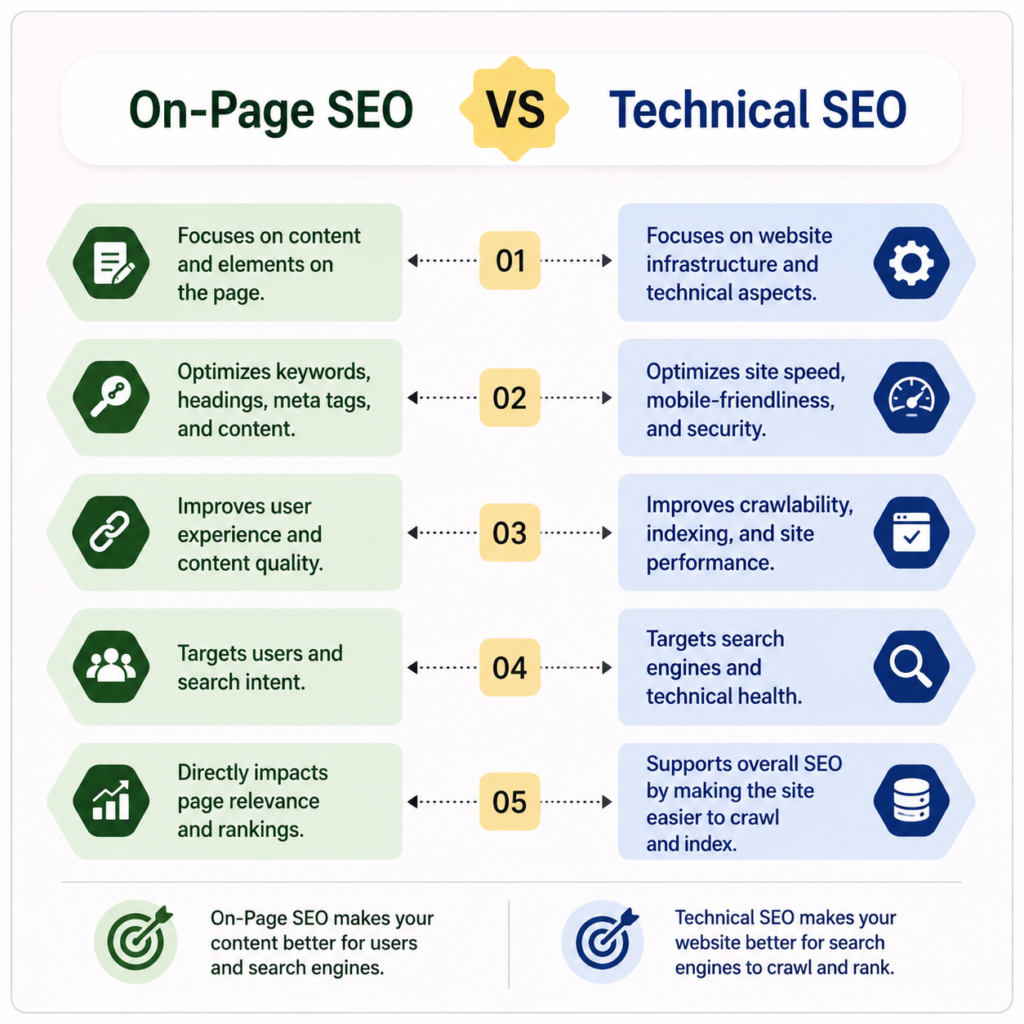
On-Page SEO vs Technical SEO: Main Differences
Focus Area
- On-Page SEO focuses on content and visible page elements.
- Technical SEO focuses on website infrastructure and backend performance.
Purpose
- On-Page SEO helps search engines understand the content of a page.
- Technical SEO helps search engines access, crawl, and index the website properly.
Optimization Method
- On-Page SEO involves content creation, keyword optimization, headings, and meta tags.
- Technical SEO involves speed optimization, security, indexing, crawlability, and website structure.
Visibility
- On-Page SEO changes are visible to users.
- Technical SEO changes mostly happen behind the scenes.
Impact on Rankings
- On-Page SEO improves content relevance for specific keywords.
- Technical SEO ensures that search engines can efficiently process and rank the website.
Tools Used
- On-Page SEO uses keyword research and content optimization tools.
- Technical SEO uses Google Search Console, PageSpeed Insights, Screaming Frog, GTmetrix, and site audit tools.
Why Both Are Important
Many people think that creating great content is enough to rank on Google. While content is extremely important, it cannot perform well if technical issues prevent search engines from accessing the website.
Similarly, a technically perfect website without valuable content will also struggle to rank.
The best SEO strategy combines both On-Page SEO and Technical SEO. On-Page SEO helps search engines understand what your content is about, while Technical SEO ensures that search engines can access and evaluate that content efficiently.
Conclusion
In the past, SEO was mostly associated with On-Page optimization, such as keywords, content, and meta tags. As search engines evolved, Technical SEO became a separate and equally important part of SEO.
The main difference is that On-Page SEO focuses on optimizing content and page elements, while Technical SEO focuses on improving the technical foundation of a website. Technical SEO includes tasks such as site speed optimization, mobile-friendliness, crawlability, indexing, structured data, website security, and Core Web Vitals improvements.
For long-term SEO success, businesses should focus on both areas. When On-Page SEO and Technical SEO work together, they create a strong foundation for higher rankings, better user experience, and increased organic traffic.