If you have a website or blog, you may have heard about meta titles and meta descriptions. These are small parts of a webpage, but they play a very important role in SEO and attracting visitors from search engines like Google.
When someone searches on Google, the meta title and meta description are usually the first things they see. They help search engines understand your content and help users decide whether they should click on your website.
In this article, we will explain meta titles and meta descriptions in simple and easy language, along with tips on how to write them effectively.
What Is a Meta Title?
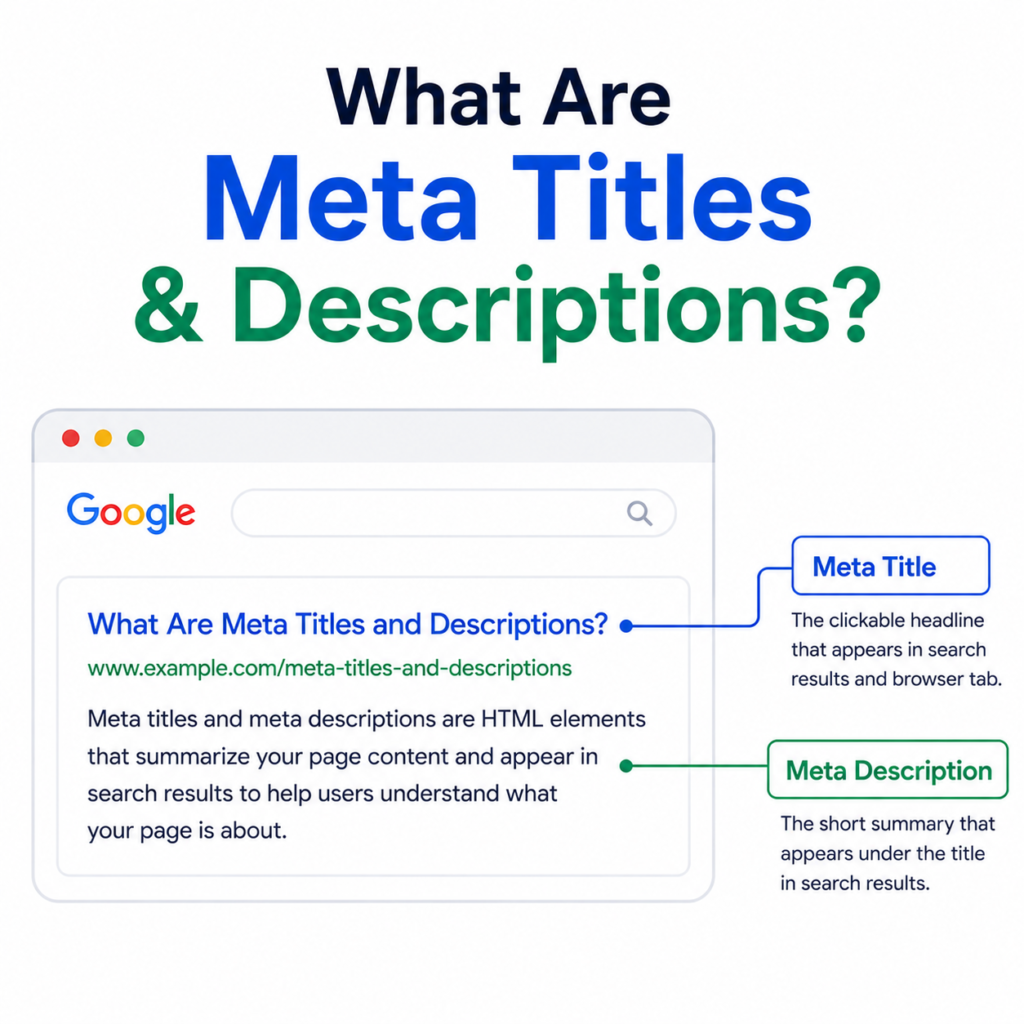
A meta title, also called a title tag, is the title that appears in Google search results. It is usually the first thing people see when your page appears on a search engine.
It also appears in the browser tab when someone opens your webpage.
Why Is a Meta Title Important?
- It tells search engines what your page is about.
- It helps users understand your content before clicking.
- A good title can increase website traffic.
- It is one of the most important SEO elements.
Example of a Meta Title
Meta Title:
Beginner’s Guide to SEO – Simple Tips for Better Rankings | Wisdom Sparkle
How to Write a Good Meta Title
Writing a strong meta title is important because it can improve both rankings and clicks. Follow these simple steps:
- Start with your main keyword.
- Clearly describe what the page is about.
- Make it interesting and useful for readers.
- Keep it short and easy to read.
- Add your brand name at the end if possible.
Example
Keyword: Meta Title
Good Meta Title:
How to Write a Meta Title for Better SEO Rankings | Wisdom Sparkle
Best Practices for Meta Titles
- Keep it between 50–60 characters.
- Place the main keyword near the beginning.
- Make it clear and easy to understand.
- Add your brand name at the end when possible.
- Avoid keyword stuffing.
- Create a unique title for every page.
What Is a Meta Description?
A meta description is the short text shown below the title in search engine results. It gives users a quick summary of what they will find on your page.
Think of it as a small advertisement for your content.
Why Is a Meta Description Important?
- It encourages people to click on your website.
- It improves the click-through rate (CTR).
- It gives users a better idea of your content.
- It can help attract the right audience.
Example of a Meta Description
Meta Description:
Learn the basics of SEO with simple tips and strategies. Improve your website rankings and attract more visitors today.
How to Write a Good Meta Description
A good meta description should explain the page clearly and encourage users to click.
Follow these simple tips:
- Summarize the page content in one or two sentences.
- Include your main keyword naturally.
- Explain the benefit users will get.
- Add a call to action.
- Keep it concise and engaging.
Example
Good Meta Description:
Learn how to write effective meta titles and meta descriptions to improve SEO, increase clicks, and attract more website visitors.
Best Practices for Meta Descriptions
- Keep it between 150–160 characters.
- Write a clear and attractive summary.
- Include important keywords naturally.
- Add a call to action such as “Learn More,” “Read Now,” or “Get Started.”
- Make it relevant to the page content.
- Write a unique description for every page.
Difference Between Meta Title and Meta Description
Meta Title | Meta Description |
Main headline in search results | Short summary below the title |
Helps search engines understand the page | Helps users decide whether to click |
Usually 50–60 characters | Usually 150–160 characters |
Important ranking factor | Helps improve CTR |
Common Mistakes to Avoid
Many website owners make simple mistakes when creating meta titles and descriptions. Avoid these common errors:
- Making titles too long.
- Writing descriptions that are too short or too long.
- Using the same title and description on multiple pages.
- Stuffing too many keywords.
- Writing misleading titles that do not match the content.
- Forgetting to include a call to action in the description.
Final Thoughts
Meta titles and meta descriptions may seem small, but they can make a big difference in your website’s SEO performance. A well-written title helps search engines understand your content, while a strong description encourages users to visit your website.
The key is to write clear, keyword-focused, and user-friendly titles and descriptions that accurately represent your content. When done correctly, they can improve visibility, increase click-through rates, and bring more traffic to your website.
If you want more clicks, better visibility, and improved SEO, always create unique and engaging meta titles and meta descriptions for every page on your website.