When writing a blog or creating a webpage, many website owners ask the same question: Should I add links to other websites, or will that send my visitors away?
It is a common concern. After spending time creating useful content, you may not want readers to leave your website by clicking on another link.
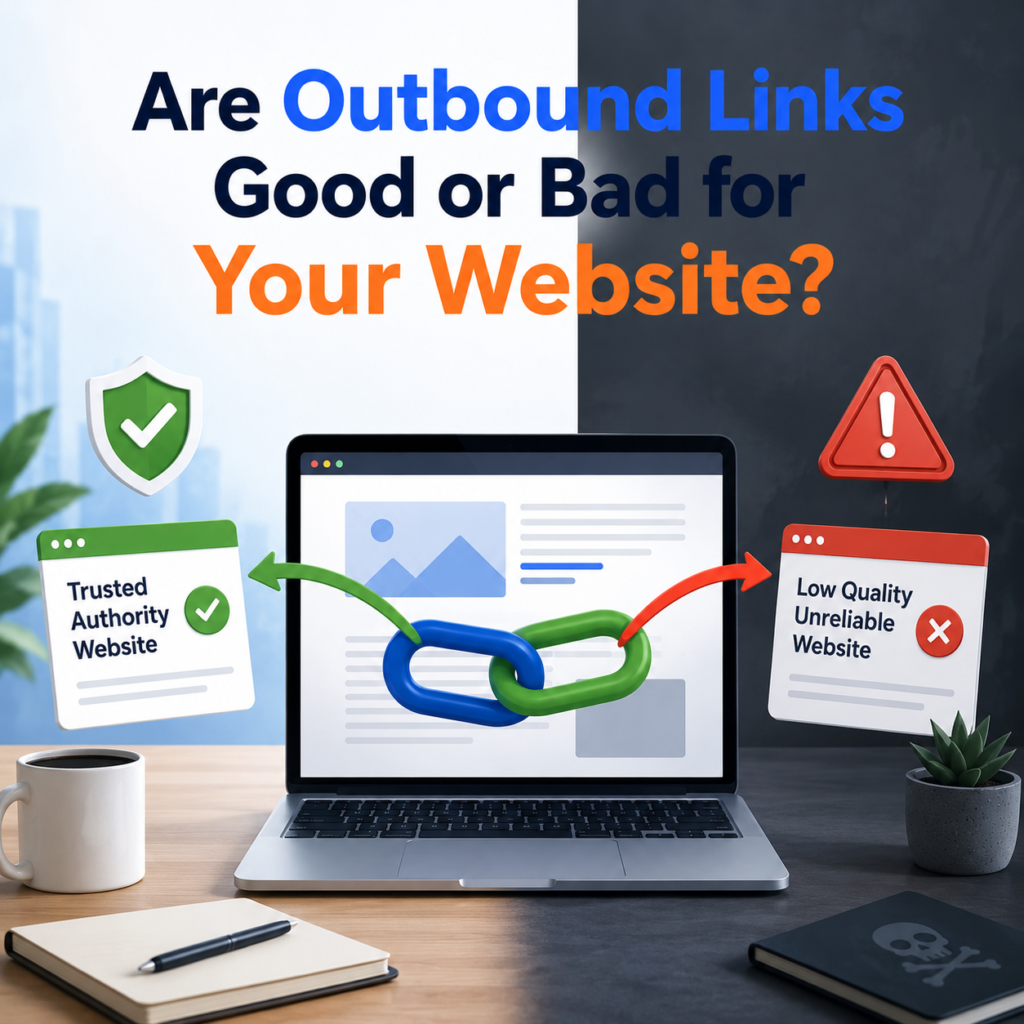
The truth is that outbound links are not bad for your website. In fact, when they are used correctly, they can improve your content, build trust with readers, and even support your SEO.
The important thing is to link only to credible and authoritative sources that provide useful and reliable information.
In this blog, let’s understand what outbound links are, why they matter, and how you can use them the right way.
What Are Outbound Links?
Outbound links are links that take visitors from your website to another website.
For example, if you write a blog about healthy eating and include a link to a trusted medical organization for more information, that is an outbound link.
Unlike internal links, which connect pages on your own website, outbound links lead visitors to a different website.
What Are Authority Sources?
An authority source is a website that is trusted because it provides accurate, reliable, and well-researched information.
These websites usually have a strong reputation in their field.
Examples include:
- Government websites
- Educational websites
- Well-known research organizations
- Trusted health organizations
- Official company websites
- Reputable news websites
Linking to these kinds of websites helps show that your content is based on trustworthy information.
Are Outbound Links Good for Your Website?
Yes, when used correctly, outbound links are generally good for your website.
They help readers, improve trust, and make your content more useful.
However, they should always be relevant to the topic you are discussing.
Why Outbound Links Are Helpful
They Build Trust
People like content that is supported by reliable information.
When you link to trusted sources, readers know that your information is not based only on opinions.
This increases confidence in your content.
They Improve User Experience
Sometimes your readers want more detailed information.
An outbound link allows them to learn more without searching for the information themselves.
This makes your content more valuable.
They Support SEO
Search engines want to show users high-quality content.
While simply adding outbound links will not automatically improve your rankings, linking to relevant and authoritative sources can help demonstrate that your content is useful and well researched.
Good SEO is about creating helpful content, and quality outbound links can be part of that.
They Add Credibility
Imagine reading two articles.
One makes several claims without any supporting information.
The other includes links to trusted organizations that explain the topic further.
Most people will trust the second article more.
Can Outbound Links Hurt Your Website?
They can, but usually only if they are used incorrectly.
Problems happen when website owners:
- Link to low-quality websites.
- Link to spam websites.
- Link to websites with false information.
- Add too many unnecessary links.
- Use links that have nothing to do with the topic.
These practices can reduce the quality of your content and create a poor experience for readers.
When Should You Add Outbound Links?
Add outbound links only when they help your readers.
For example, you can link to another website when:
- You mention important research.
- You refer to official guidelines.
- You explain statistics.
- You recommend an official tool.
- You discuss a trusted organization.
- You want readers to learn more about a topic.
Every link should have a clear purpose.
When Should You Avoid Outbound Links?
There are times when adding external links is unnecessary.
Avoid linking when:
- The website cannot be trusted.
- The information is outdated.
- The page is no longer available.
- The link has nothing to do with your content.
- You are adding links just to increase the number of links.
Quality is always more important than quantity.
Choose Credible and Authoritative Sources
One of the best SEO practices is to link only to websites with a strong reputation.
Good sources usually provide:
- Accurate information.
- Updated content.
- Professional writing.
- Reliable research.
- Official announcements.
- Helpful resources.
Before adding a link, take a few moments to check the website.
If you would trust it yourself, your readers are more likely to trust it too.
Don’t Overuse Outbound Links
Adding a few helpful links is useful.
Adding dozens of links on every page is not.
Too many external links can distract readers and make your content harder to follow.
Instead, include only the links that genuinely improve the article.
Outbound Links and Internal Links
Some people think they should only use internal links.
Actually, both types are important.
Internal links help visitors discover more pages on your own website.
Outbound links provide extra information from trusted sources when needed.
Using both creates a better experience for readers.
Check Your Outbound Links Regularly
Websites change over time.
A page that works today may be removed next year.
That is why it is important to review your outbound links from time to time.
If a linked page is broken or no longer exists, update it or remove it.
Keeping your links current helps maintain a professional website.
Simple Tips for Using Outbound Links
Here are a few easy habits to follow:
- Link only to trusted and relevant websites.
- Make sure the linked page is working.
- Use clear anchor text that describes the destination.
- Don’t add links just for the sake of adding them.
- Review your links regularly.
These small steps can improve both user experience and the overall quality of your content.
A Simple Example
Imagine you are writing a blog about drinking enough water.
You explain the benefits and then add a link to an official health organization that provides daily hydration recommendations.
Your readers can learn more from a trusted source if they want.
Now imagine linking to an unknown website with no reliable information.
Most readers would question whether your content is trustworthy.
This example shows why choosing the right source matters.
Common Mistakes to Avoid
Many beginners make mistakes with outbound links.
Some common ones include:
- Linking to unreliable websites.
- Using broken external links.
- Adding too many links on one page.
- Linking to pages unrelated to the topic.
- Never checking if the links still work.
Avoiding these mistakes helps keep your website useful and professional.
Final Thoughts
So, are outbound links good or bad for your website? In most cases, they are good when they are used thoughtfully.
Linking out to credible, authoritative sources where relevant helps readers find reliable information, improves the value of your content, and builds trust in your website. It also shows that your content is supported by dependable references rather than unsupported claims.
At the same time, it is important to be selective. Avoid linking to low-quality or unrelated websites, and check your links regularly to make sure they still work.
Remember, outbound links are not about sending visitors away. They are about giving readers the best possible experience by connecting them with trustworthy information when it adds value. When used wisely, outbound links can make your content stronger, more helpful, and more reliable for both your audience and search engines.