Introduction
Every website owner wants one thing — to rank on Google and get more visitors. Whether you have a blog, business website, online store, or portfolio, showing up on Google can help you grow faster online.
But many people think SEO is very difficult. They hear words like backlinks, technical SEO, algorithms, and keywords, and they feel confused. The truth is that ranking on Google in 2026 is not only about tricks. It is mostly about creating useful content and giving people a good experience.
Google is becoming smarter every year. It now understands what users really want. That means websites with helpful content, fast speed, and a good user experience have a better chance of ranking higher.
In this blog, we will talk about easy SEO strategies that actually work in 2026. Everything is explained in simple language so beginners can understand easily.
What Does Ranking on Google Mean?
When someone searches for something on Google, thousands of websites appear in the results.
For example:
- Best fitness tips
- How to lose weight
- Digital marketing course
Google shows websites that it thinks are most useful and relevant.
Ranking on Google means your website appears higher in those search results. The higher your website ranks, the more visitors you can get.
Why SEO Is Important in 2026
SEO stands for Search Engine Optimization.
It simply means improving your website so Google can understand it better and show it to more people.
Benefits of SEO
- Helps increase website traffic
- Brings visitors naturally without ads
- Builds trust and authority
- Helps businesses get customers
- Improves online visibility
- Gives long-term results
In 2026, SEO is more important because online competition is growing every day.
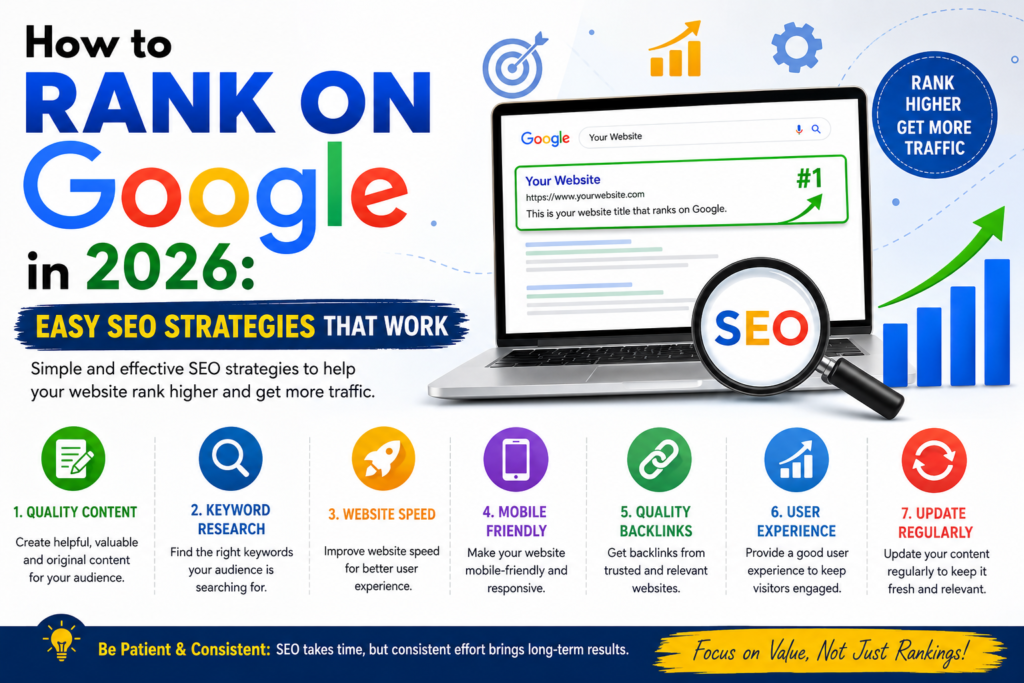
Easy SEO Strategies That Work in 2026
1. Focus on Helpful Content
Google now cares more about helpful and useful content than ever before.
If your content solves people’s problems, answers their questions, and gives value, your chances of ranking become much higher.
Tips for Writing Helpful Content
- Use simple language
- Write for real people, not only for Google
- Answer common questions
- Share useful tips
- Make content easy to read
Things to Avoid
- Copying content from other websites
- Writing only for search engines
- Adding unnecessary information
2. Use the Right Keywords
Keywords are the words people search on Google.
For example:
- How to rank on Google
- SEO tips for beginners
- Best digital marketing strategies
Using the right keywords helps Google understand your content better.
Best Places to Add Keywords
- Blog title
- Headings
- First paragraph
- Meta description
- Image alt text
- Throughout the content naturally
Avoid Keyword Stuffing
Do not repeat the same keyword too many times because it can look spammy.
3. Write Catchy SEO Titles
Your title is the first thing people notice on Google.
A good title can improve clicks and traffic.
Examples of Good SEO Titles
- How to Rank on Google Faster in 2026
- Easy SEO Tips for Beginners
- Best Ways to Increase Website Traffic
Tips for Better Titles
- Keep titles simple
- Add your main keyword
- Make them interesting
- Keep them clear and readable
4. Improve Website Speed
People do not like slow websites.
If your website loads slowly, visitors may leave quickly. Google notices this and may rank your website lower.
Simple Ways to Improve Website Speed
- Compress images
- Use fast hosting
- Remove unnecessary plugins
- Use lightweight themes
- Enable website caching
Why Speed Matters
A fast website improves user experience and helps keep visitors on your site longer.
5. Make Your Website Mobile-Friendly
Today, most users search on Google using smartphones.
If your website does not work properly on mobile devices, it can hurt your rankings.
A Mobile-Friendly Website Should
- Load properly on phones
- Have readable text
- Be easy to navigate
- Have clickable buttons
- Load quickly
Why Mobile SEO Matters
Google mainly checks the mobile version of websites now.
6. Use Proper Heading Structure
Headings make your content easier to read and understand.
They also help Google understand your content structure.
Basic Heading Structure
H1
Used for the main blog title.
H2
Used for main sections of the blog.
H3
Used for smaller points under H2 headings.
Benefits of Proper Headings
- Better readability
- Improved SEO
- Easier navigation for readers
7. Add Internal Links
Internal links connect one page of your website to another.
For example, you can link your SEO blog to another blog about keyword research.
Benefits of Internal Linking
- Helps visitors stay longer
- Improves website navigation
- Helps Google understand your website
- Increases page views
Internal Linking Tip
Always add links naturally within the content.
8. Get Quality Backlinks
Backlinks are links from other websites pointing to your website.
Google sees backlinks as a sign of trust and authority.
Easy Ways to Get Backlinks
- Write useful content
- Guest post on websites
- Share blogs on social media
- Create unique guides
- Connect with other bloggers
Focus on Quality
A few quality backlinks are better than many low-quality links.
9. Optimize Images for SEO
Images make blogs more attractive, but they should also be optimized properly.
Tips for Image SEO
- Use clear image names
- Add alt text
- Compress large images
- Use high-quality visuals
Why Image Optimization Matters
Optimized images help improve website speed and SEO performance.
10. Update Old Content Regularly
Many people publish blogs and never update them again.
Updating old content can improve rankings and keep information fresh.
Things You Can Update
- Add new information
- Improve headings
- Add better keywords
- Fix broken links
- Improve readability
Why Updating Content Helps
Google often prefers fresh and updated content.
11. Improve User Experience
Google wants users to enjoy visiting websites.
If visitors stay longer on your website, it sends positive signals to Google.
Ways to Improve User Experience
- Use short paragraphs
- Add bullet points
- Use simple language
- Avoid too many ads
- Make the website clean and organized
Why User Experience Matters
Good user experience can improve rankings and reduce bounce rates.
12. Use SEO-Friendly URLs
Your website URLs should be short, simple, and clear.
Good URL Example
yourwebsite.com/how-to-rank-on-google
Bad URL Example
yourwebsite.com/page?id=12345
Benefits of SEO-Friendly URLs
- Easier to read
- Better for SEO
- Improves user understanding
13. Write Meta Titles and Meta Descriptions
Meta titles and descriptions appear on Google search results.
They help people understand what your page is about.
Meta Title Tips
- Add your keyword
- Keep it short
- Make it attractive
Meta Description Tips
- Explain the blog clearly
- Use simple language
- Encourage clicks
14. Promote Content on Social Media
Social media can help bring more traffic to your website.
When people share your content, it can increase visibility and engagement.
Platforms You Can Use
Social Media Tip
Share your blogs regularly to reach more people.
15. Be Patient and Consistent
SEO takes time.
Many beginners quit because they do not see quick results. But websites that stay consistent usually grow over time.
Important Things to Remember
- Publish content regularly
- Keep improving your website
- Learn new SEO trends
- Focus on quality
- Avoid shortcuts
Why Consistency Matters
Consistency is one of the biggest secrets behind successful SEO.
Common SEO Mistakes to Avoid
Keyword Stuffing
Using the same keyword too many times can hurt rankings.
Copying Content
Google prefers original content.
Ignoring Mobile Users
Poor mobile experience can reduce traffic.
Slow Website Speed
Slow websites frustrate users.
Poor Content Quality
Thin or useless content usually does not rank well.
Future of SEO in 2026
SEO is changing quickly because of AI and smarter search engines.
Google now focuses more on:
- Helpful content
- User experience
- Search intent
- Mobile performance
- Trust and authority
Websites helping real people will continue to perform better.
Final Thoughts
Ranking on Google in 2026 is not about complicated tricks. It is about creating helpful content, improving user experience, and understanding what people are searching for.
Simple strategies like using the right keywords, improving website speed, writing quality blogs, and staying consistent can make a big difference over time.
SEO may take patience, but the results are worth it. A well-ranked website can bring traffic, customers, growth, and long-term success without spending money on ads every day.
Start small, keep learning, and focus on helping your audience. That is one of the best SEO strategies that will always work.