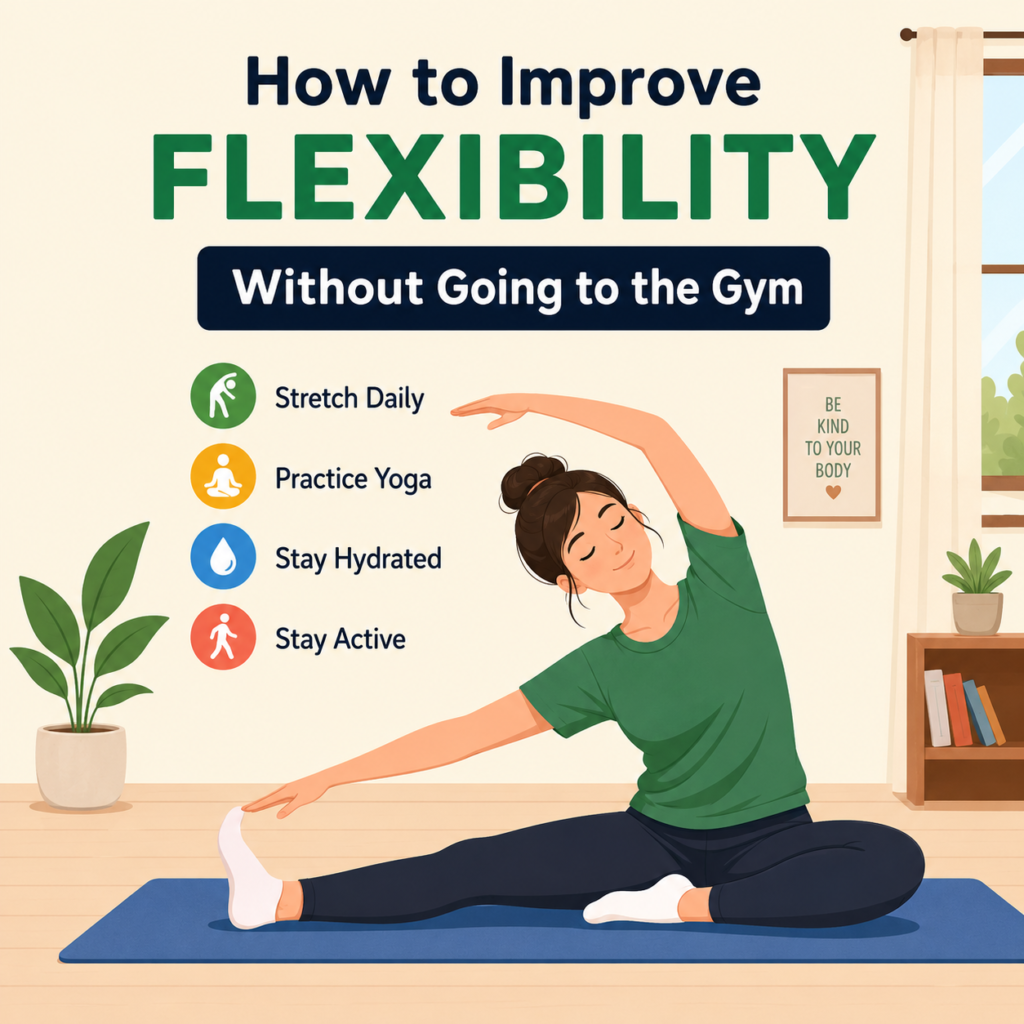
Flexibility is something many people ignore until their body starts feeling stiff, tired, or uncomfortable. You may notice it when bending down, sitting for long hours, or even while waking up in the morning. The good news is that you do not need a gym membership or expensive equipment to become more flexible. You can improve your body flexibility right at home with simple daily habits and easy exercises.
Flexibility is not only for yoga teachers, dancers, or athletes. It is important for everyone. A flexible body moves better, feels lighter, and helps reduce body pain and stiffness. Even a few minutes of stretching every day can make a big difference.
In this blog, we will talk about simple and natural ways to improve flexibility without going to the gym.
What Does Flexibility Mean?
Flexibility means how easily your body and joints can move without pain or stiffness. A flexible body moves better and feels more comfortable during daily activities.
Why Is Flexibility Important?
Better Body Movement
Flexible muscles help your body move freely and comfortably.
Less Muscle Tightness
Stretching keeps muscles relaxed and reduces stiffness.
Better Posture
Flexibility helps improve the way you sit and stand.
Lower Risk of Injuries
Flexible muscles are less likely to get hurt during movement.
Reduced Stress
Stretching can relax both the body and mind.
Better Blood Flow
Body movement improves circulation and keeps muscles healthy.
Can You Improve Flexibility at Home?
Yes, you can improve flexibility without going to the gym. Daily stretching, yoga, and simple body movements at home can make a big difference over time.
Easy Ways to Improve Flexibility Without Going to the Gym
Start Your Day with Stretching
Morning stretching helps wake up stiff muscles and improves body movement.
Simple Morning Stretches
- Stretch your arms overhead
- Touch your toes slowly
- Rotate your shoulders
- Twist your waist gently
- Stretch your legs
Practice Yoga at Home
Yoga is one of the best natural ways to improve flexibility.
Easy Yoga Poses for Beginners
Child’s Pose
Helps stretch the back and hips.
Cat-Cow Stretch
Improves spine flexibility.
Cobra Pose
Stretches the chest and lower back.
Downward Dog
Stretches the legs and shoulders.
Butterfly Pose
Improves hip flexibility.
Stretch After Sitting for Long Hours
Sitting too much can make the body feel stiff and tight.
Quick Desk Stretches
- Roll your neck slowly
- Stretch your arms
- Rotate your ankles
- Stand and touch your toes
Stay Physically Active
Daily body movement helps keep muscles flexible.
Activities That Improve Flexibility
- Walking
- Dancing
- Cycling
- Swimming
- Home workouts
Focus on Deep Breathing
Deep breathing helps muscles relax during stretching.
Simple Breathing Tip
- Breathe in slowly through your nose
- Breathe out slowly through your mouth
- Relax while stretching
Drink Enough Water
Water helps muscles and joints stay healthy and active.
Tips to Stay Hydrated
- Carry a water bottle
- Drink water after stretching
- Eat fruits with high water content
Do Simple Full Body Stretches Daily
Simple stretching exercises can improve flexibility slowly and safely.
Easy Full Body Stretch Routine
Neck Stretch
Move your neck gently from side to side.
Shoulder Stretch
Pull one arm across your chest.
Side Stretch
Raise one arm and bend sideways.
Hamstring Stretch
Reach toward your toes while sitting.
Quad Stretch
Pull one foot behind your body while standing.
Calf Stretch
Stretch one leg backward against a wall.
Do Not Rush the Process
Flexibility takes time and regular practice. Small progress is still progress.
Sleep Properly
Good sleep helps muscles recover and relax.
Simple Sleep Tips
- Sleep at the same time daily
- Avoid phone use before bed
- Keep your room comfortable
Warm Up Before Stretching
Warming up helps prepare the muscles for stretching.
Simple Warm-Up Ideas
- March in place
- Walk around the room
- Rotate your arms
- Do light jumping
Common Mistakes to Avoid
Stretching Too Hard
Never force your body into painful positions.
Skipping Warm-Up
Cold muscles are harder to stretch safely.
Being Inconsistent
Daily stretching gives better results.
Holding Your Breath
Always breathe normally during stretches.
Comparing Yourself to Others
Every body improves at its own speed.
Best Time to Stretch
Morning
Helps reduce stiffness after sleep.
After Exercise
Warm muscles stretch more easily.
Evening
Stretching at night can relax the body.
Foods That Help Muscle Health
Fruits and Vegetables
Provide vitamins and hydration.
Nuts and Seeds
Support healthy muscles.
Protein Foods
Help repair muscles.
Healthy Fats
Support joints and movement.
How Long Does It Take to Improve Flexibility?
Some people notice small changes within a few weeks. Bigger improvements may take more time. Daily practice is the key.
Simple Daily Flexibility Routine for Beginners
Exercise | Time |
Neck Stretch | 30 seconds |
Shoulder Stretch | 30 seconds |
Side Stretch | 30 seconds |
Toe Touch Stretch | 30 seconds |
Butterfly Pose | 30 seconds |
Cat-Cow Stretch | 1 minute |
Child’s Pose | 1 minute |
Final Thoughts
Improving flexibility without going to the gym is completely possible. You do not need expensive equipment or hard workouts. Simple stretching, yoga, body movement, and healthy habits can help your body become more flexible over time.
The most important thing is to stay regular and patient. Your body may feel stiff today, but with daily practice, it can slowly become lighter, stronger, and more comfortable.
Start with small steps. Stretch a little every day, move your body often, and listen to your muscles. Over time, you will notice better movement, less stiffness, and a healthier body overall.