Staying active is one of the best things you can do for your body and mind. But when people start learning about fitness, they often hear two words again and again — aerobic and anaerobic exercise.
At first, these words may sound difficult, but the idea behind them is actually very simple. Both types of exercise are good for your health, but they work in different ways and give different benefits.
In this blog, we’ll understand the simple difference between aerobic and anaerobic activities, their benefits, examples, risks, and how often you should do them.
What Is Aerobic Exercise?
Aerobic exercise is also called cardio exercise. It includes activities that increase your breathing and heart rate for a longer period of time.
During aerobic exercise, your body uses oxygen to create energy. That’s why these exercises are usually done at a steady pace for several minutes or longer.
These activities help improve the health of your heart and lungs and also increase stamina.
Simple Meaning of Aerobic Exercise
Aerobic means:
- “Aer” = air or oxygen
- “Bic” = using
So, aerobic exercise means activities that use oxygen to give energy to your body.
Examples of Aerobic Activities
Some common aerobic exercises are:
- Brisk walking
- Jogging
- Running slowly for a long time
- Cycling
- Swimming
- Dancing
- Zumba
- Stair climbing
- Rowing
- Elliptical workouts
These exercises usually continue for 20–60 minutes without stopping too much.
Benefits of Aerobic Exercise
Aerobic workouts have many health benefits. They help your body stay healthy in different ways.
1. Improves Heart Health
Aerobic exercise strengthens your heart and improves blood circulation.
2. Helps With Weight Loss
It burns calories and helps reduce body fat when done regularly.
3. Increases Stamina
You can do daily activities more easily without getting tired quickly.
4. Supports Mental Health
Cardio exercise can reduce stress, anxiety, and sadness. It also helps improve mood.
5. Improves Sleep
People who exercise regularly often sleep better at night.
6. Reduces Risk of Diseases
Aerobic exercise may lower the risk of:
- Heart disease
- High blood pressure
- Stroke
- Type 2 diabetes
- Obesity
What Is Anaerobic Exercise?
Anaerobic exercise is different from aerobic exercise. These activities are short, fast, and powerful.
During anaerobic exercise, your body does not depend mainly on oxygen for energy. Instead, it uses stored energy in the muscles.
These exercises are usually done with high effort for a short time.
Simple Meaning of Anaerobic Exercise
Anaerobic means:
- “An” = without
- “Aerobic” = oxygen
So, anaerobic exercise means activities that use less oxygen and more stored energy.
Examples of Anaerobic Activities
Some common anaerobic exercises include:
- Sprinting
- Heavy weight lifting
- Push-ups
- Pull-ups
- Jump squats
- Box jumps
- High-Intensity Interval Training (HIIT)
- Resistance band workouts
- Fast cycling
- Explosive exercises
These exercises are usually done for a few seconds to a few minutes with high effort.
Benefits of Anaerobic Exercise
Anaerobic workouts are great for building strength and power.
1. Builds Muscle
Strength training helps increase muscle size and muscle strength.
2. Burns Fat
High-intensity workouts can help burn calories even after exercise.
3. Improves Strength
You become stronger for daily activities like lifting, climbing, or carrying things.
4. Increases Bone Strength
Weight training supports healthy and stronger bones.
5. Improves Athletic Performance
Anaerobic workouts help improve speed, power, and quick movement.
6. Helps Prevent Muscle Loss
As people age, they naturally lose muscle. Strength exercises can help maintain muscle mass.
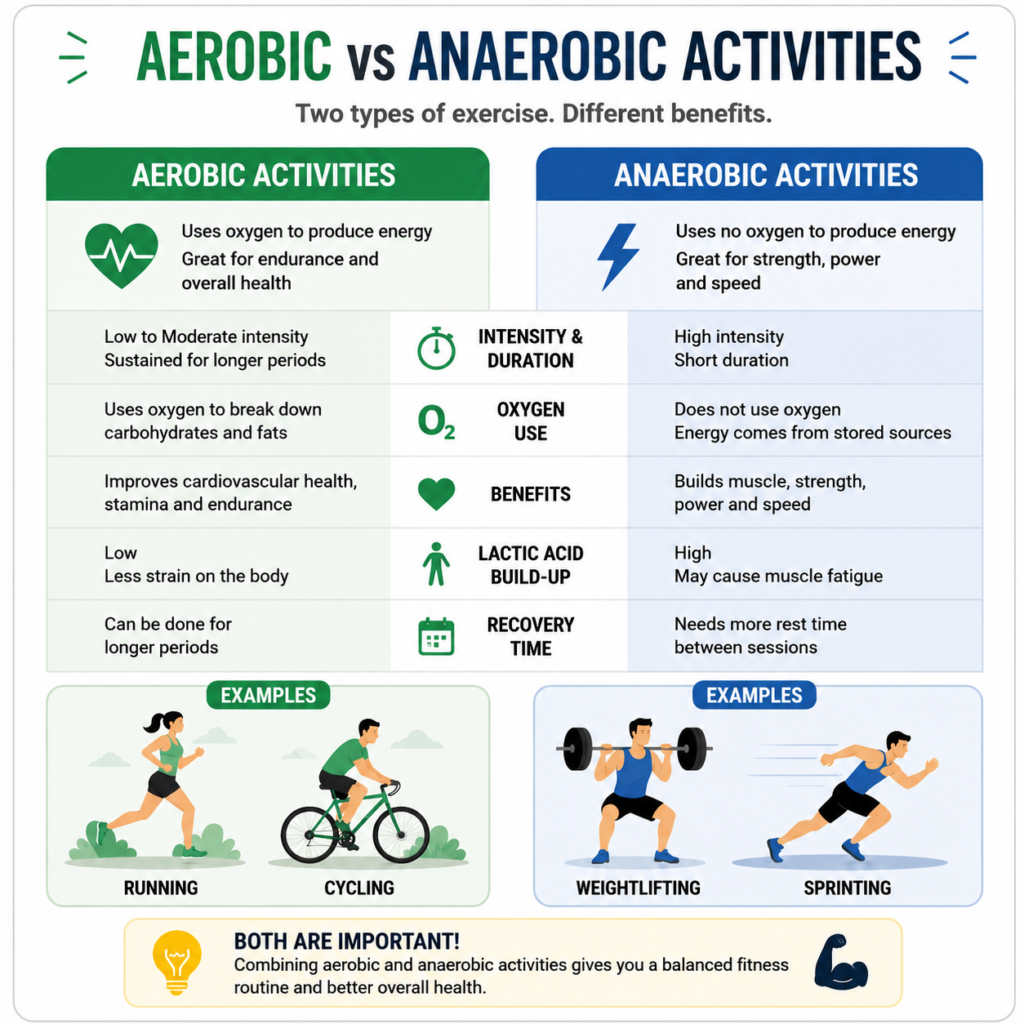
Main Difference Between Aerobic and Anaerobic Activities
Here is the simple difference between the two:
Aerobic Exercise | Anaerobic Exercise |
Uses oxygen for energy | Uses stored energy in muscles |
Done for a longer time | Done for a short time |
Moderate intensity | High intensity |
Improves stamina | Improves strength |
Burns fat slowly | Burns calories quickly |
Examples: walking, cycling | Examples: sprinting, weight lifting |
Both are important for overall fitness.
Which Exercise Is Better?
There is no single answer because both are helpful in different ways.
Choose Aerobic Exercise If You Want To:
- Improve heart health
- Lose weight slowly
- Increase stamina
- Feel more active
- Reduce stress
Choose Anaerobic Exercise If You Want To:
- Build muscle
- Increase strength
- Improve speed and power
- Burn fat faster
- Improve athletic performance
The best fitness routine usually includes both aerobic and anaerobic exercises.
Can You Combine Both?
Yes, absolutely. In fact, combining both types of exercise gives better results for many people.
For example:
- Walking or cycling improves stamina
- Weight training builds strength
- HIIT workouts improve both cardio and power
A balanced routine keeps your body strong, active, and healthy.
Aerobic vs Anaerobic for Weight Loss
Both can help with weight loss, but they work differently.
Aerobic Exercise for Weight Loss
Aerobic workouts burn calories steadily over time. Activities like jogging or cycling can help reduce body fat gradually.
Anaerobic Exercise for Weight Loss
Anaerobic workouts build muscle and increase metabolism. More muscle means your body burns more calories even while resting.
Best Option
For better weight loss results, many fitness experts suggest combining:
- Cardio exercises
- Strength training
- Healthy eating
- Good sleep
Risks of Aerobic Exercise
Aerobic exercise is safe for most people, but problems can happen if you overdo it.
Possible Risks
- Muscle pain
- Knee pain
- Overtraining
- Dehydration
- Tiredness
Safety Tips
- Start slowly
- Wear proper shoes
- Drink water
- Warm up before exercise
- Rest when needed
If you have a health problem or haven’t exercised in a long time, talk to a doctor first.
Risks of Anaerobic Exercise
Anaerobic exercises are more intense, so injuries can happen if the technique is wrong.
Possible Risks
- Muscle strain
- Joint pain
- Back injuries
- Fatigue
- Overtraining
Safety Tips
- Learn proper form
- Don’t lift too much weight at first
- Rest between workouts
- Warm up properly
- Exercise with control
Beginners should start slowly and increase intensity step by step.
How Often Should You Do Aerobic Exercise?
Health experts recommend:
- At least 30 minutes of moderate aerobic activity
- Around 5 days a week
Examples include:
- Walking
- Cycling
- Swimming
- Dancing
Even small daily workouts can make a big difference.
How Often Should You Do Anaerobic Exercise?
Strength or anaerobic workouts should usually be done:
- 2–3 times per week
Your muscles need time to recover between sessions.
You can focus on different body parts on different days to avoid overtraining.
Best Aerobic Exercises for Beginners
If you are new to fitness, start with simple exercises like:
- Walking
- Light cycling
- Slow jogging
- Basic dance workouts
- Swimming
These are easy on the body and help build stamina slowly.
Best Anaerobic Exercises for Beginners
Beginners can try:
- Bodyweight squats
- Push-ups
- Lunges
- Resistance bands
- Light dumbbell exercises
Start with fewer repetitions and improve gradually.
Signs You Need More Aerobic Exercise
You may need more cardio if:
- You get tired very quickly
- Climbing stairs feels difficult
- Your stamina is low
- You sit for long hours daily
Signs You Need More Anaerobic Exercise
You may need more strength training if:
- Your muscles feel weak
- Daily lifting feels difficult
- You want to build muscle
- You want better body strength
Simple Weekly Workout Example
Here’s a simple routine for beginners:
Monday
Brisk walking – 30 minutes
Tuesday
Light strength training
Wednesday
Cycling or jogging
Thursday
Rest or stretching
Friday
Bodyweight workout
Saturday
Dance or swimming
Sunday
Rest day
This type of balance can improve both stamina and strength.
Final Thoughts
Understanding the simple difference between aerobic and anaerobic activities can help you choose the right workouts for your goals.
Aerobic exercise is great for improving heart health, stamina, and overall fitness. Anaerobic exercise is helpful for building muscle, strength, and power.
You don’t have to choose only one. A healthy fitness routine usually includes both types of exercise. Start slowly, stay consistent, and listen to your body.
Even small daily movements can improve your health and make you feel better over time.