
Getting an injury can happen at any time. You may twist your ankle while playing basketball, pull a muscle during a workout, or fall while running. Usually, the first thing you notice is pain. After that, the injured area may become swollen or inflamed.
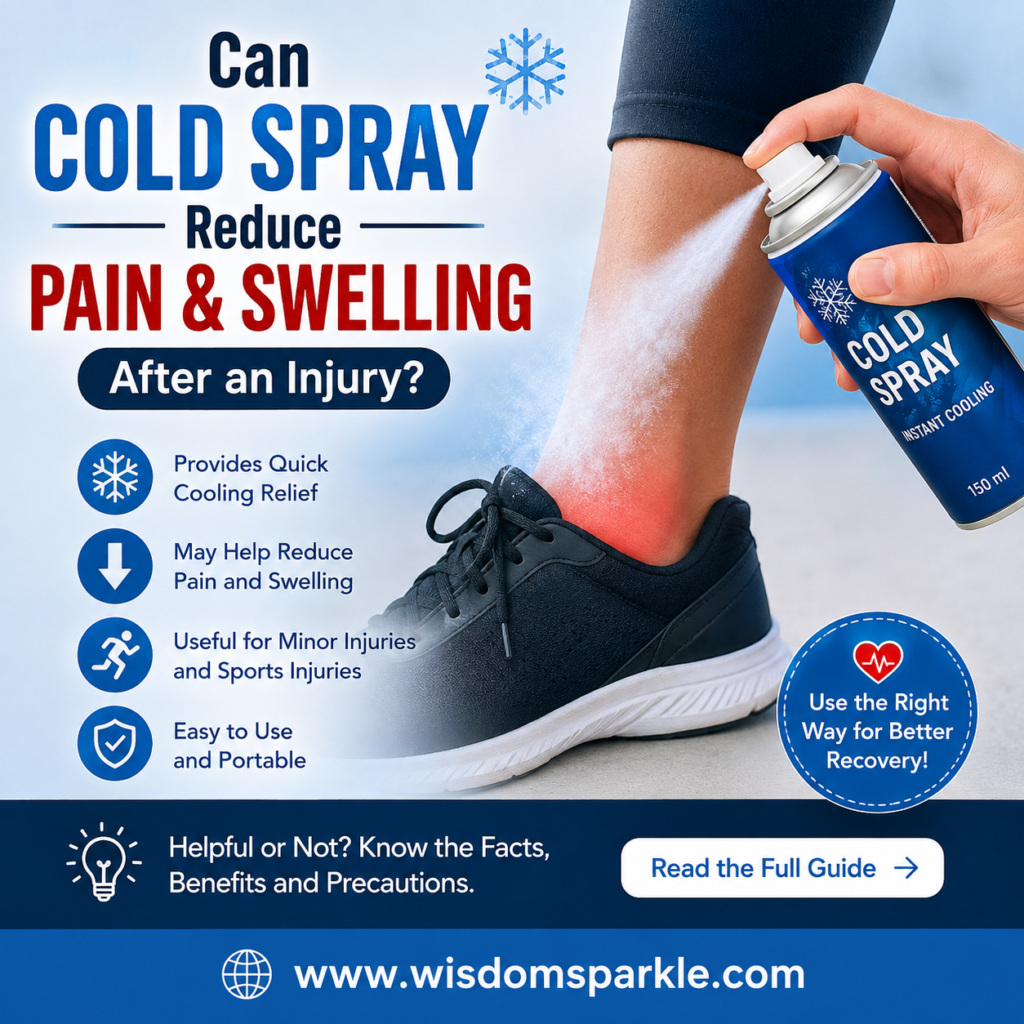
If you have watched a sports match, you may have seen a trainer quickly spray something on a player’s injury. This is often called cold spray or freeze spray.
It can make the pain feel better within a few seconds. But does cold spray actually heal an injury? And can it reduce swelling?
Let’s take a simple look at how cold spray works and when it can be useful.
What Is Cold Spray?
Cold spray, also known as freeze spray, is a spray that quickly cools the skin.
When the spray touches your skin, it evaporates very quickly. This takes heat away from the skin and makes the area feel cold. The cold feeling can temporarily numb the area and reduce pain.
This is why cold spray is often used for minor sports injuries when someone needs quick pain relief.
However, there is one important thing to remember:
Cold spray does not heal the actual injury.
It cannot repair a torn ligament, fix a broken bone, or repair damaged muscle. It mainly helps manage the pain for a short time.
Can Cold Spray Reduce Pain?
Yes, But Only for a Short Time
Cold spray can provide quick, temporary pain relief.
When the skin becomes very cold, the area becomes numb. This can reduce the pain signals that travel from the injured area to your brain. This is why the pain may feel much better shortly after using the spray.
For example, imagine you get a small knock on your leg while playing football. The area hurts, so a cold spray may help reduce the pain for a few minutes.
But you should not mistake less pain for a healed injury.
The injury is still there even if you cannot feel it as much.
Be Careful After Using It
This is especially important for athletes.
If cold spray makes an injury feel better, you may think you can continue playing. But putting pressure on an injured muscle, joint, or ligament can make the problem worse.
A small injury could become a more serious one if you continue using the injured body part.
So, don’t use cold spray simply to hide the pain and keep playing.
Can Cold Spray Reduce Swelling?
Not Very Well
This is where cold spray is different from an ice pack.
Cold therapy can help control swelling because cold can narrow the blood vessels in the area. But cold spray only cools the surface of the skin for a very short time.
It does not cool deep into the muscles or joints, and its effect does not last long enough to significantly reduce deeper swelling.
So, while cold spray can be useful for quick pain relief, it is not the best option when your main problem is swelling.
For swelling, a properly used ice pack or cold compress may be more useful.
Cold Spray vs. Ice Pack
Both cold spray and ice packs use cold therapy, but they work in different ways.
Cold Spray | Ice Pack |
Provides quick pain relief | Provides longer-lasting cooling |
Works mainly on the skin | Can cool deeper tissues |
Usually lasts only a few minutes | Usually used for around 15–20 minutes |
Easy to carry and use | Needs to be kept cold before use |
Useful for quick relief | More suitable for swelling and longer cooling |
Cold spray is convenient because you can keep it in a sports bag or first-aid kit. An ice pack takes more preparation, but it can provide deeper and longer-lasting cooling.
How to Use Cold Spray Safely
Cold spray may seem simple to use, but you still need to be careful.
Keep the Right Distance
Hold the can at the distance mentioned on the product label. Spraying it too close to the skin can cause serious skin damage, including frostbite or burns.
Do Not Spray for Too Long
Do not continuously spray the same area for a long time.
More spray does not mean faster healing. It can actually increase the chance of damaging your skin.
Avoid Broken Skin
Never spray cold spray over an open wound, cut, scrape, or irritated skin unless the product specifically says it is safe.
Watch Your Skin
Stop using the spray if you feel strong burning or notice the skin becoming white or grey. These can be signs that the skin is being damaged.
What Should You Do After an Injury?
Cold spray should not be the only thing you use after an injury.
For a minor soft-tissue injury, basic care may include rest, ice, compression, and elevation. Modern injury care can also include gentle movement when it is safe to do so.
Rest
Stop the activity that caused the injury. Continuing to play or exercise can make the injury worse.
Ice
For deeper cooling, use an ice pack wrapped in a towel. The uploaded guide recommends using it for around 15–20 minutes at a time.
Compression
An elastic bandage can be used to help control swelling. Make sure it is not so tight that it causes numbness or discomfort.
Elevation
If your arm or leg is swollen, keeping it raised can help reduce the buildup of fluid around the injured area.
When Should You See a Doctor?
Cold spray is mainly useful for minor injuries. You should not rely on it when an injury appears serious.
Get medical help if:
- The pain is severe.
- You cannot put weight on the injured leg or foot.
- You hear a pop or crack when the injury happens.
- The joint or limb looks deformed.
- The swelling appears very quickly or is very large.
- You have numbness, tingling, or weakness below the injured area.
These signs may point to a more serious injury that needs proper medical care.
Final Thoughts
So, can cold spray reduce pain and swelling after an injury?
Cold spray can provide quick and temporary pain relief by cooling and numbing the skin. However, it is not designed to heal the injury itself.
It also does not provide the deep or long-lasting cooling that an ice pack can provide, so it may not be very effective for reducing deeper swelling.
Think of cold spray as a quick pain-relief tool, not a cure.
If you have a minor injury, stop the activity, protect the injured area, and give your body time to recover. If the pain is severe, swelling is significant, or you notice unusual symptoms, it is better to get medical advice.
Disclaimer: This article is for general information only and should not replace advice from a qualified healthcare professional.


