Benefits of Aerobics for Females: Daily Workout Guide
 Shruti Thakral
May 24, 2026
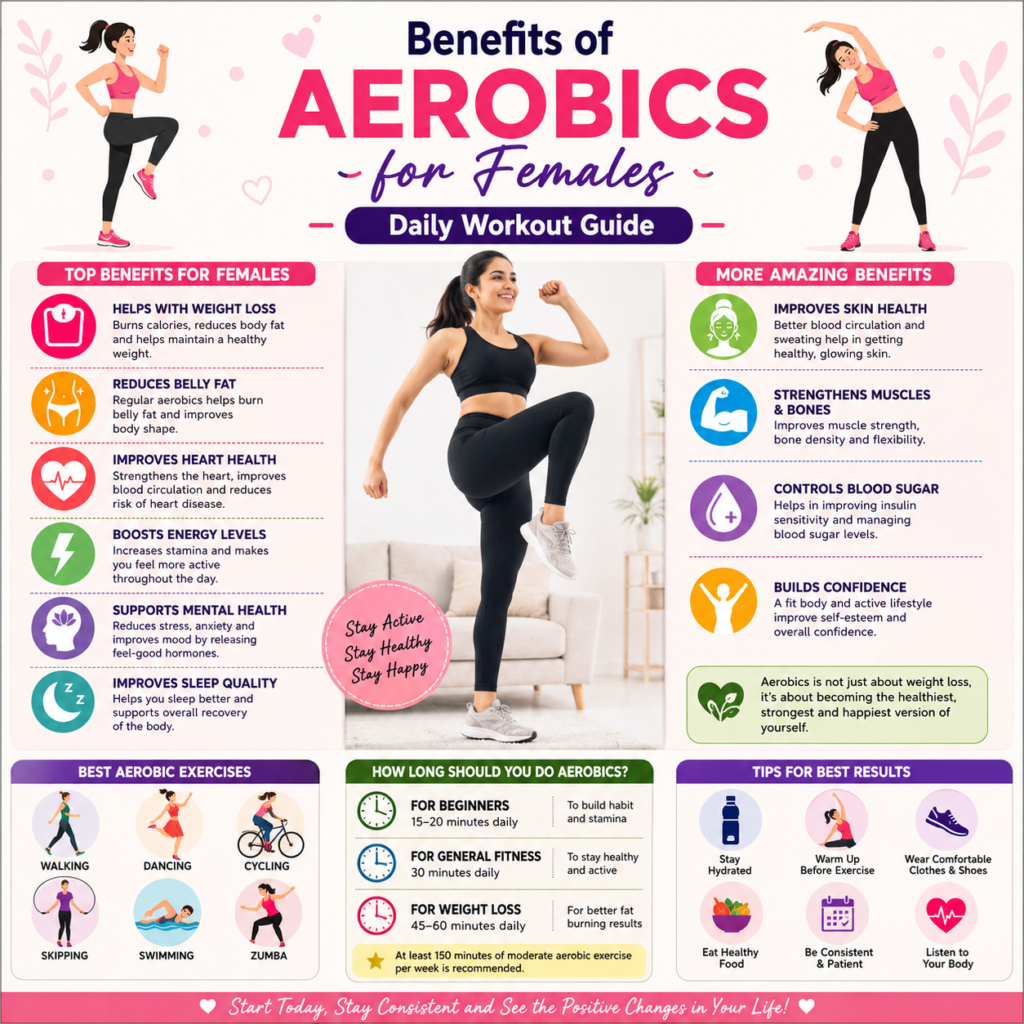
Some days, getting a workout done feels like a task in itself. You have work to finish, things to manage at home and a dozen little jobs waiting for your attention. By the time you get a free moment, the idea of changing clothes and heading to the gym may not sound very exciting.
But exercise does not always need a gym.
You can walk around your neighbourhood, dance while your favourite songs play, ride a bicycle or follow a simple cardio routine in your living room. These activities can get your heart working harder without making your day complicated.
That is the beauty of aerobics. It gives you plenty of ways to move, and you can choose the ones that suit your routine.
For females, regular aerobic exercise can support heart health, stamina, sleep and mental well-being. It can also help with weight management. You do not need to run for miles or exercise until you are completely worn out to get started.
Let’s talk about what aerobics actually does, which exercises you can try at home or outdoors, and how to put together a routine you can realistically follow.
What Is Aerobics?
Aerobics is physical activity that keeps your large muscle groups moving for a period of time. Your breathing gets faster, your heart rate rises and your body uses more oxygen to help produce the energy needed for movement.
Think about the difference between walking slowly through a shopping centre and walking briskly to reach somewhere on time. The second one makes you breathe harder. That is the kind of change you notice during moderate aerobic exercise.
You do not need special equipment for it. Many familiar activities count as aerobic exercise, including:
- Brisk walking
- Jogging and running
- Cycling
- Swimming
- Dancing and Zumba
- Skipping rope
- Climbing stairs
- Low-impact cardio workouts
The activity does not have to look like a traditional workout. A dance session at home can be just as much a part of your exercise routine as a treadmill session at the gym.
The important thing is to keep moving at an intensity that suits your fitness level.
8 Benefits of Aerobics for Females
Aerobic exercise gets your heart, lungs and muscles working together. When you make it a regular habit, it can support several parts of your health.
Here are eight reasons to make room for it in your week.
1. It Keeps Your Heart Active
Your heart works all day, even when you are sitting on the sofa or sleeping. During aerobic exercise, it has to pump blood faster to supply your working muscles.
Regular activity can improve cardiovascular fitness and help support healthy blood pressure. It is also associated with a lower risk of heart disease and stroke.
You do not have to choose a high-intensity workout to look after your heart. Brisk walking, swimming and cycling are all useful options.
A simple way to judge your pace is the talk test. During moderate activity, you should be able to talk, although singing would be difficult. If you cannot catch your breath, slow down.
2. It Helps With Weight Management
Many women start exercising because they want to manage their weight. Aerobics can help with that, but it is worth understanding what it can and cannot do.
When you walk briskly, cycle, swim or dance, your body uses energy. Regular aerobic activity can increase the energy you use throughout the week. Along with balanced eating habits and other daily movement, it can support weight management.
However, doing more cardio does not guarantee faster weight loss. Food intake, sleep, daily activity, health and individual differences all affect the result.
And no, you cannot choose where your body loses fat. A daily dance workout will not specifically burn belly fat, just as doing hundreds of crunches will not remove fat from only your stomach.
Instead of worrying about one body area, pay attention to your overall fitness. Can you walk for longer? Are the stairs becoming easier? Do you feel more comfortable during daily activities? These are useful signs of progress too.
3. It Builds Stamina for Everyday Life
A workout is not the only time you need stamina. You use it when you climb stairs, walk through a market, carry shopping bags or spend time doing household work.
If these activities leave you tired quickly, improving your fitness may help.
Aerobic exercise trains your body to handle continuous movement. As your cardiovascular fitness develops, everyday activities may begin to feel less tiring.
You might notice that you can walk a little farther without stopping or climb stairs without needing such a long break.
These changes do not happen overnight. Start with a comfortable walking session and increase the time as it gets easier. There is no prize for doing too much on your first day.
4. It Can Improve Your Mood
Ever gone for a walk after a stressful day and returned feeling a little lighter? Exercise cannot fix every problem, but movement can give your mind a break.
Physical activity can reduce short-term feelings of anxiety. Regular exercise is also linked with better mental well-being and a lower risk of depression.
You can choose something that feels enjoyable rather than forcing yourself through a workout you dislike.
Put on a few songs and dance. Walk outside for 15 minutes. Cycle somewhere peaceful. Even a short session can give you time away from work, screens and daily responsibilities.
If you are dealing with ongoing anxiety or depression, exercise can be one part of looking after yourself, but it is not a replacement for professional care.
5. It Supports Better Sleep
If you spend most of the day sitting, adding some movement may help your sleep.
Regular physical activity is associated with better sleep quality. It may also help with stress and anxiety, which can sometimes make it harder to settle down at night.
Try a morning walk, an afternoon cycling session or a workout at a time that fits your schedule.
There is no rule that says everyone must exercise in the morning. Some women prefer evenings. Others find that intense exercise close to bedtime makes it harder to sleep. Pay attention to your own routine and adjust the timing if needed.
6. It Contributes to Bone and Muscle Health
Walking, dancing and climbing stairs are weight-bearing activities. Your body works against gravity during these movements, which can contribute to bone health.
But there is something important to remember: aerobics should not be your only type of exercise.
Your muscles need strengthening work too. Squats, wall push-ups, resistance band exercises and suitable weight training can help build and maintain muscle.
A mix of aerobic and strength exercises gives your body different kinds of support. This is useful throughout adulthood and becomes especially important as you get older, when maintaining muscle and bone strength deserves more attention.
7. It Supports Blood Sugar Control
Your muscles need energy when you move, and they use glucose during exercise. Regular physical activity can help your body respond better to insulin and manage blood sugar.
That is one reason walking, cycling and other forms of exercise are often included in lifestyle advice for people with type 2 diabetes.
You can start with something simple, such as a comfortable walk after a meal. You do not need a complicated workout plan to add more movement to your day.
If you have diabetes or take medication that can cause low blood sugar, speak with your healthcare professional before changing your exercise routine. You may need to plan your activity, meals and medication carefully.
8. It Gives You More Ways to Stay Active
Not every woman enjoys the same workout. One person may happily walk on a treadmill, while another would rather dance for half an hour.
Aerobics gives you options.
You can walk on weekdays, swim when you have time or cycle at the weekend. If one activity starts feeling dull, try something else.
Having choices makes it easier to fit movement around your life. You are not tied to one machine, one class or one strict workout plan.
Best Aerobic Exercises for Females
You do not need to try all these activities. Start with one or two that feel comfortable and suit your surroundings.
1. Brisk Walking
Walking is a sensible place to begin, especially if you have not exercised regularly.
You can walk in a nearby park, around your neighbourhood, on a treadmill or in a suitable indoor space. Just pick up the pace a little compared with your usual relaxed walk.
During a moderate walk, you should be able to talk but find singing difficult. That is a useful way to check your effort without needing a fitness watch.
Start with 10–15 minutes if that feels manageable. Add a few minutes when your body gets used to it.
2. Dancing or Zumba
If you find walking a little dull, put on some music.
Dancing keeps your body moving and can raise your heart rate. You can dance freely at home or follow a beginner-friendly Zumba session.
Start with a few songs rather than trying to copy every move in a long workout video. Take a break when you need one.
The aim is to keep moving, not to get every step perfect.
3. Cycling
Cycling works your leg muscles and can improve cardiovascular fitness.
You can ride outdoors or use a stationary cycle at home or in the gym. If you are new to it, choose a comfortable setting and begin with a short ride.
As your stamina improves, you can gradually increase the time or distance.
4. Swimming
Swimming is a good option if you enjoy being in the water. It involves several muscle groups and provides resistance as you move.
Water also supports much of your body weight, so swimming is a lower-impact activity than exercises involving repeated jumping.
If you are not confident in the water, learn in a safe place with proper supervision. Never swim alone if you are not a capable swimmer.
5. Low-Impact Aerobics
Low-impact aerobics can be a comfortable starting point for people who want to avoid repeated jumps.
Try these simple movements:
- Marching in place
- Side steps
- Step touches
- Gentle knee lifts
- Controlled arm movements
Keep one foot on the floor during the steps and move at a pace you can manage.
You can do these exercises in your living room. Move any furniture or loose objects out of the way first so you have enough space.
6. Stair Climbing
Climbing stairs makes your heart work harder and uses the muscles in your legs.
Start with a few steps and take your time. Use the handrail if you need support. There is no need to race up and down.
If stair climbing causes knee pain or discomfort, choose walking or cycling instead. An exercise is not automatically better because it feels harder.
7. Skipping Rope
Skipping is a vigorous aerobic activity. It can improve cardiovascular fitness and coordination, but it involves repeated jumps and puts impact on your feet, ankles and knees.
That is why it may not be suitable for every beginner.
If you already have some fitness experience and no movement restrictions, try short intervals with breaks. Wear supportive shoes and use a suitable surface.
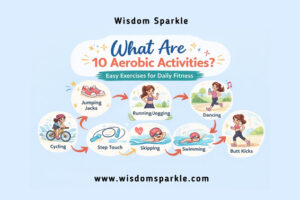
For more ideas, take a look at our guide to 10 aerobic activities for daily fitness.
A Simple 20-Minute Aerobics Workout at Home
No treadmill, cycle or gym membership? You can still put together a basic cardio session.
Try this 20-minute routine:
| Exercise | Time |
|---|---|
| Slow marching in place | 3 minutes |
| Side steps | 3 minutes |
| Brisk marching or indoor walking | 5 minutes |
| Gentle knee lifts | 2 minutes |
| Dancing or step touches | 5 minutes |
| Slow walking to cool down | 2 minutes |
| Total | 20 minutes |
Begin with gentle movements and let your body warm up. During the faster parts, work at a pace that feels challenging but manageable.
If you need a break, take one. You can also shorten the session to 10 minutes when you are just starting.
Finish by walking slowly for the last two minutes. This gives your breathing and heart rate time to settle gradually.
How Many Minutes of Aerobics Should Females Do?
There is no need to guess how much exercise to aim for. The World Health Organization gives general weekly recommendations for adults.
Adults should aim for:
- 150–300 minutes of moderate-intensity aerobic activity each week, or
- 75–150 minutes of vigorous-intensity aerobic activity each week, or
- A combination of moderate and vigorous activity that provides a similar amount.
Adults should also do muscle-strengthening activities that work all major muscle groups on at least two days each week.
Here is what that can look like in everyday life: a 30-minute brisk walk on five days of the week adds up to 150 minutes.
You can also split activity into shorter sessions throughout the day. If you have been inactive, start with less and build up gradually. The goal is to increase how often, how long and how hard you exercise as your fitness improves.
A Weekly Workout Plan You Can Actually Follow
If you like having a plan, here is a simple way to mix cardio, strength work and recovery.
| Day | Workout | Duration |
|---|---|---|
| Monday | Brisk walking | 20–25 minutes |
| Tuesday | Beginner strength exercises | 15–20 minutes |
| Wednesday | Dancing or Zumba | 20 minutes |
| Thursday | Comfortable walking | 20–25 minutes |
| Friday | Strength exercises and gentle stretching | 20 minutes |
| Saturday | Cycling or swimming | 25–30 minutes |
| Sunday | Rest or an easy walk | As comfortable |
This is an example, not a strict timetable. You can change the days, choose different activities or shorten the sessions.
If you are a beginner, do not worry about completing everything straight away. Build up slowly and give yourself enough time to recover.
For simple strength exercises you can do at home, see our guide to beginner workout routines at home.
Is Morning or Evening Better for Aerobics?
You might prefer getting exercise out of the way early. Someone else may not feel ready to move until the evening. Neither approach is automatically better for everyone.
The best time is the one that fits your schedule and allows you to exercise consistently.
Morning Aerobics
A morning walk or workout can be a nice way to begin the day.
It may suit you if:
- Your evenings are usually busy.
- You enjoy walking outdoors early.
- You feel more motivated in the morning.
Just do not cut short your sleep to squeeze in an unnecessarily early workout. Rest matters as much as exercise.
Evening Aerobics
If mornings are rushed, exercise after work or your other daily responsibilities.
You could walk, cycle, swim or follow a short dance workout. If you notice that intense exercise close to bedtime affects your sleep, try finishing earlier or choosing a gentler activity.
There is no need to force yourself into a morning routine if evenings work better.
Tips for Women Who Are Just Starting Aerobics
Starting is usually easier when you stop trying to do everything at once. A few practical habits can help you settle into a routine.
Do Not Rush Into Long Workouts
If you have not exercised for a while, begin with 10–15 minutes.
When that feels comfortable, add a few minutes. Increasing your activity gradually is more sensible than doing a long workout on the first day and feeling too sore or tired to continue.
Warm Up First
Give yourself around five minutes to prepare for the main workout.
March slowly, take easy steps, move your shoulders and do gentle leg movements. Then gradually increase your pace.
Wear Comfortable Clothes and Shoes
Choose clothes that let you move freely. For walking, dancing and other activities involving repeated steps, wear supportive shoes that fit properly.
You do not need expensive workout clothes. Comfort and safety come first.
Drink Enough Water
Keep water nearby, particularly during longer workouts or hot weather.
Drink throughout the day and replace fluids after exercising. Your needs depend on the temperature, workout intensity and how much you sweat.
Give Your Body Time to Recover
You do not have to do a hard workout every day.
Mix more challenging sessions with easier activities. Take a rest day when you need one, and pay attention if you feel unusually tired or have pain that does not settle.
If pain persists or you are unsure whether an activity is suitable, seek medical advice.
Eat Proper Meals
Skipping meals to lose weight faster is not a good idea, especially when you are exercising.
Your body needs energy and nutrients to move and recover. Include a variety of foods in your meals, such as fruits, vegetables, whole grains and protein sources.
Exercise should be part of looking after your body, not a punishment for what you have eaten.
Can Females Do Aerobics During Periods?
For many women, exercising during their periods is perfectly manageable.
A comfortable walk, gentle cycling or low-impact aerobics may be fine. Some women also find that light movement helps them feel better during menstruation.
But periods can feel very different from one person to another. You may have a day when you feel normal and another when cramps or tiredness make exercise the last thing you want.
Listen to your body. Reduce the intensity or take a rest day if you need one. There is no reason to force yourself through a difficult workout.
If period pain is severe, unusual or regularly affects your daily activities, speak with a healthcare professional.
Can Women Do Aerobics During Pregnancy?
Many women can remain physically active during an uncomplicated pregnancy, but the right exercise routine depends on their health and pregnancy.
Before starting a new workout or changing your existing routine, discuss it with your obstetrician or healthcare professional.
For healthy pregnant women without medical or pregnancy complications, moderate activity is generally encouraged. Suitable options may include walking, swimming and stationary cycling. A commonly recommended target is at least 150 minutes of moderate activity each week, with individual advice from a healthcare professional.
Avoid activities with a high risk of falling or being hit in the abdomen. Keep yourself hydrated and avoid overheating.
Stop exercising and contact your healthcare professional if you experience warning signs such as vaginal bleeding, dizziness or faintness, chest pain, unusual shortness of breath, painful contractions or fluid leaking from the vagina.
Pregnancy is not the time to push for weight loss or copy an intense workout you see online. Follow advice that takes your own health into account.
Aerobics Mistakes Worth Avoiding
Sometimes people make exercise harder than it needs to be. Watch out for these common mistakes:
- Doing too much too soon: Your body needs time to adjust. Increase your workout gradually.
- Ignoring pain: Normal effort is different from sharp or worsening pain. Stop if a movement hurts.
- Skipping the warm-up: Start with gentle movement before increasing the pace.
- Doing only cardio: Aerobic activity is useful, but strength training matters for muscle and bone health too.
- Expecting quick weight loss: Results take time and depend on more than exercise alone.
- Comparing yourself with others: Your routine should suit your fitness level, health and daily schedule.
Frequently Asked Questions About Aerobics for Females
1. What are the main benefits of aerobics for females?
Regular aerobic exercise can improve cardiovascular fitness, build stamina, support weight management and contribute to better sleep and mental well-being. It can also help with blood pressure and blood sugar control.
2. How many minutes of aerobics should a woman do daily?
There is no fixed daily amount for every woman. One way to meet the general adult recommendation is 30 minutes of moderate aerobic activity on five days each week. Beginners can start with shorter sessions and gradually increase their activity.
3. Is 20 minutes of aerobics enough?
Yes. A 20-minute session adds to your weekly activity and is a useful starting point. You can increase the duration as your fitness improves.
4. Which aerobic exercise is best for beginners?
Brisk walking is a good starting option for many people. Gentle dancing, indoor marching and low-impact aerobics are other choices. Pick something comfortable that does not cause pain.
5. Can aerobics help reduce belly fat?
Aerobic exercise can support overall fat loss when combined with balanced eating habits and regular movement. However, it cannot target belly fat specifically.
6. Can females do aerobics every day?
Many women can do some form of aerobic activity daily, provided the intensity suits their fitness level. You can alternate more challenging sessions with easy walks or recovery days.
7. Is aerobics better than strength training for females?
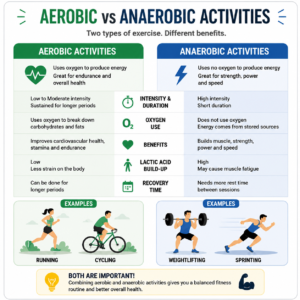
They serve different purposes, so one does not replace the other. Aerobic exercise supports heart and lung fitness, while strength training helps build and maintain muscle. A balanced routine includes both.
8. Can aerobics be done at home without equipment?
Yes. Marching in place, dancing, side steps, indoor walking and low-impact cardio movements can all be done at home. Clear some floor space and wear comfortable footwear.
Final Thoughts
You do not need a perfect workout plan to become more active. You could start with a short walk, dance while making time for yourself or try a few simple movements in your living room.
Once those activities become part of your week, you can slowly build on them.
Aerobic exercise can support your heart, stamina, sleep and overall well-being. Add strength training on at least two days each week, give your body time to recover and choose activities that fit your life.
Some days you may manage 30 minutes. On other days, 10 minutes may be all you have. Keep moving when you can, and do not turn exercise into another reason to feel guilty.
A routine you can enjoy and maintain is worth much more than an ambitious plan you cannot stick with.