
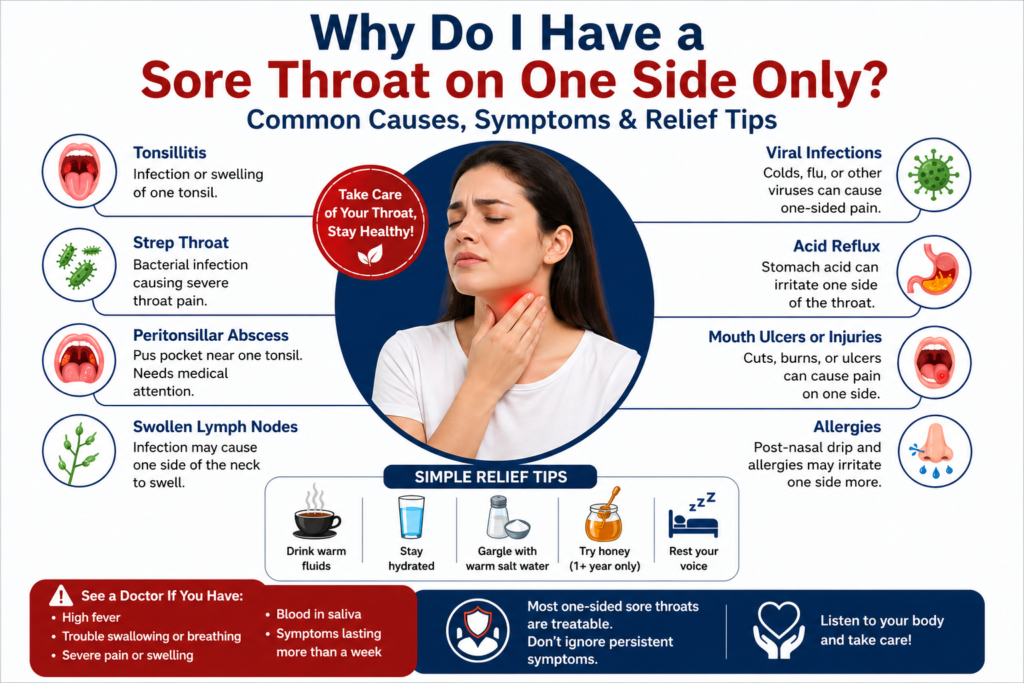
A sore throat is something most of us have experienced. It can make swallowing painful, talking uncomfortable, and even eating less enjoyable. Usually, a sore throat affects the whole throat. But sometimes, you may notice pain only on one side. This can feel strange and may even cause worry.
The good news is that a one-sided sore throat is often caused by common and treatable conditions. In many cases, it is nothing serious. However, understanding the possible reasons can help you know when to treat it at home and when to seek medical help.
In this blog, we will explain why you may have a sore throat on one side, the common causes, symptoms to watch for, treatment options, and ways to prevent it.
What Does a One-Sided Sore Throat Mean?
A one-sided sore throat simply means that the pain, irritation, or discomfort is mainly on one side of your throat. You may feel it when swallowing, speaking, or even while resting.
Sometimes, the pain may stay only in the throat. In other cases, it can spread to the ear, jaw, or neck on the same side.
This usually happens when a problem affects only one area, such as one tonsil, one lymph node, or one side of the throat.
Common Causes of a One-Sided Sore Throat
There are several possible reasons for this type of throat pain.
1. Tonsillitis
Your tonsils are two small glands located at the back of your throat. If only one tonsil becomes infected or swollen, you may feel pain on one side.
Other symptoms may include:
- Redness
- Swelling
- White patches
- Fever
- Difficulty swallowing
Tonsillitis can be caused by viruses or bacteria.
2. Strep Throat
Streptococcal pharyngitis can sometimes cause pain that feels stronger on one side. It is a bacterial infection that often develops quickly.
Common signs include:
- Severe throat pain
- Fever
- Swollen lymph nodes
- White spots on the tonsils
- Headache
A doctor can confirm strep throat with a simple test.
3. Peritonsillar Abscess
This is a pocket of pus that forms near one tonsil. It usually develops as a complication of untreated tonsillitis.
Symptoms include:
- Severe pain on one side
- Trouble opening the mouth
- Muffled voice
- Drooling
- Swelling in the face or neck
This condition needs immediate medical attention.
4. Swollen Lymph Nodes
When your body is fighting an infection, the lymph nodes in your neck may swell. Sometimes, only one side is affected.
You might notice:
- A tender lump
- Pain when turning your neck
- Mild throat discomfort
This usually improves as the infection clears.
5. Viral Infections
Common viral illnesses like the cold or flu can sometimes start with pain on one side.
Common cold and Influenza often cause:
- Runny nose
- Cough
- Sneezing
- Fever
- Body aches
The pain may move to both sides as the infection progresses.
6. Acid Reflux
Gastroesophageal reflux disease can irritate one side of the throat, especially while sleeping.
Symptoms may include:
- Burning sensation
- Sour taste in the mouth
- Hoarseness
- Cough, especially at night
7. Mouth Ulcers or Injuries
Accidentally biting your cheek, eating sharp foods, or burning your throat with hot drinks can cause one-sided pain.
This type of pain usually heals within a few days.
8. Allergies
Seasonal allergies can cause throat irritation, especially if mucus drips down the back of your throat.
Allergic rhinitis may also cause:
- Sneezing
- Itchy eyes
- Nasal congestion
- Cough
When Should You Be Concerned?
Most one-sided sore throats are harmless. However, certain symptoms should never be ignored.
Seek medical help if you have:
- Difficulty breathing
- Trouble swallowing liquids
- High fever
- Severe swelling
- A muffled voice
- Blood in saliva
- Symptoms lasting more than a week
- A lump in the neck
These signs may indicate a more serious problem.
How Is It Diagnosed?
A doctor will usually:
- Examine your throat
- Check your tonsils
- Feel your neck for swollen lymph nodes
- Ask about your symptoms
In some cases, additional tests may be needed, such as:
- Throat swab
- Blood test
- Imaging scans
Home Remedies for Relief
If your symptoms are mild, home care can help.
Gargle With Warm Salt Water
This helps reduce swelling and kill bacteria.
Drink Warm Fluids
Tea, soup, and warm water can soothe the throat.
Stay Hydrated
Water keeps your throat moist and comfortable.
Use a Humidifier
Moist air can ease irritation.
Rest Your Voice
Avoid shouting or speaking too much.
Try Honey
Honey can coat and soothe the throat.
Do not give honey to children under one year.
Medical Treatments
Treatment depends on the cause.
- Viral infections usually improve on their own.
- Bacterial infections may require antibiotics.
- Abscesses may need drainage.
- Acid reflux may require medication.
- Allergies may improve with antihistamines.
Always follow your doctor’s advice.
Can Stress Cause One-Sided Throat Pain?
Stress itself does not directly cause a sore throat, but it can make you more aware of discomfort.
It can also lead to:
- Muscle tension
- Acid reflux
- Dry mouth
These issues can contribute to throat pain.
How Long Does It Last?
The duration depends on the cause.
- Viral infections: 3 to 7 days
- Bacterial infections: A few days after antibiotics
- Minor injuries: 2 to 5 days
- Allergies: Until the trigger is controlled
If symptoms continue beyond a week, see a doctor.
Prevention Tips
You can lower your risk by:
- Washing your hands often
- Avoiding close contact with sick people
- Staying hydrated
- Not smoking
- Managing allergies
- Treating acid reflux
- Using a clean toothbrush
Simple habits can make a big difference.
Frequently Asked Questions
Is a One-Sided Sore Throat Serious?
Usually, no. Most cases are caused by infections or irritation.
Can Ear Pain Occur Too?
Yes. The throat and ear share nerve pathways, so pain can spread.
Should I Take Antibiotics?
Only if a doctor confirms a bacterial infection.
Can Cancer Cause One-Sided Throat Pain?
Rarely, but persistent symptoms should always be evaluated.
Final Thoughts
A sore throat on one side can feel uncomfortable, but it is often caused by common conditions like tonsillitis, viral infections, allergies, or acid reflux.
Most cases improve with simple home care and rest. However, severe pain, swelling, or difficulty swallowing should never be ignored.
If your symptoms are persistent or worsening, it is always best to consult a healthcare professional.
Your throat works hard every day. Taking care of it can help you recover faster and stay healthy.