What Is the 3-3-3 Rule Workout? Everything You Need to Know
 Shruti Thakral
October 15, 2025
The 3-3-3 rule workout is a simple way to make exercise feel less complicated. But there is one thing worth knowing: people use this name for two different workout methods.
One version focuses on exercising three times a week, while the other combines three minutes of cardio, three strength exercises, and three rounds in one session. Neither is an officially standardized workout program.
Both approaches aim to make fitness easier to follow, especially for beginners. Let’s understand how they work, how you can try them, and whether they can help you reach your fitness goals.
What Is the 3-3-3 Rule Workout?
The 3-3-3 rule workout is a simple fitness approach built around the number three. It has two commonly used versions.
The first version is the weekly 3-3-3 rule:
- 3 workouts per week.
- 3 types of exercise: strength, cardio, and flexibility and mobility.
- 3 fitness goals: strength, stamina, and flexibility and mobility.
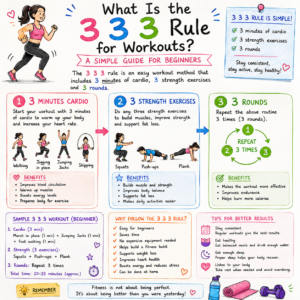
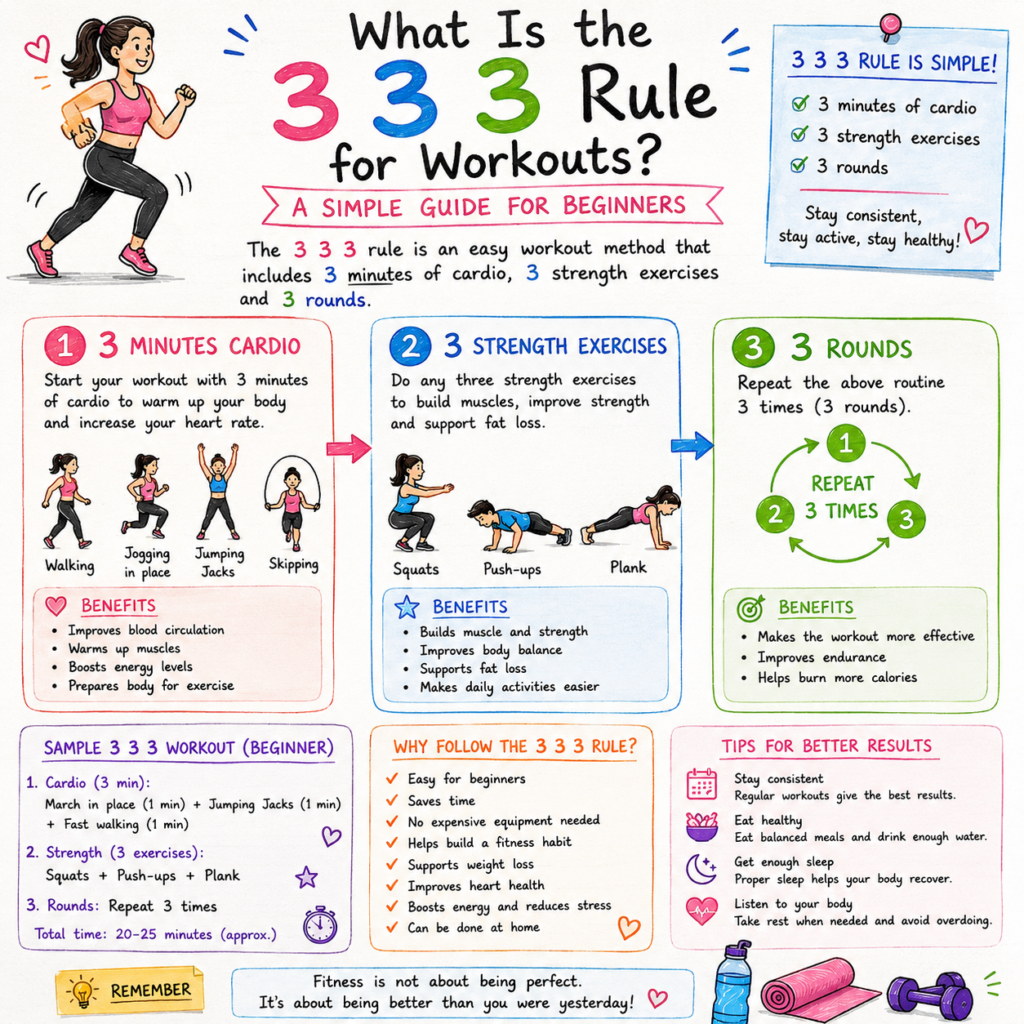
The second version is the single-session 3-3-3 rule:
- 3 minutes of cardio.
- 3 strength exercises.
- 3 rounds of the exercises.
The weekly version helps you plan your exercise schedule. The single-session version gives you a short workout structure to follow.
You can choose either approach depending on your schedule, fitness level, and personal goals.
Version 1: Understanding the Weekly 3-3-3 Workout Rule
The weekly version is about exercising three times a week and including three important types of physical activity.
You don’t need to spend every day at the gym. Instead, you can spread your workouts across the week and give your body time to recover.
1. Three Workouts Per Week
Choose three days that fit your schedule. Monday, Wednesday, and Friday are one simple option.
Each day can focus on a different area of fitness.
For example:
- Monday: Strength training.
- Wednesday: Cardio exercises.
- Friday: Flexibility and mobility exercises.
You can also combine different exercises in each session. The main idea is to keep your weekly routine balanced.
2. Three Types of Exercise
The weekly version includes strength training, cardio, and flexibility and mobility exercises.
Strength Training
Strength exercises help build muscles and improve the way your body handles everyday activities.
Some examples include:
- Squats
- Push-ups
- Lunges
- Dumbbell rows
- Glute bridges
You can start with bodyweight exercises and add weights when you feel ready.
Cardio
Cardio exercises increase your heart rate and help improve stamina.
Some easy options include:
- Brisk walking
- Cycling
- Jogging
- Dancing
- Swimming
Choose an activity you enjoy. It will be much easier to stay consistent when exercise doesn’t feel like a punishment.
You can also read our guide on morning vs. evening cardio to understand when you might prefer doing your cardio sessions.
Flexibility and Mobility
Flexibility and mobility exercises help your body move comfortably. They can also improve your range of motion and reduce stiffness.
You can include:
- Yoga
- Gentle stretching
- Shoulder rolls
- Hip mobility exercises
- Hamstring stretches
Even a short stretching session can be a useful addition to your routine.
3. Three Main Fitness Goals
The weekly 3-3-3 approach also focuses on three basic fitness goals:
- Strength: Build stronger muscles and support everyday movements.
- Stamina: Improve your ability to stay active without getting tired quickly.
- Flexibility and mobility: Help your body move comfortably through different movements.
Working on all three can give you a more balanced fitness routine.
Sample Weekly 3-3-3 Workout Schedule
Here is a simple example of how you can arrange your week.
| Day | Activity |
|---|---|
| Monday | Strength training for 30 minutes |
| Tuesday | Light walking |
| Wednesday | Cardio for 30 minutes |
| Thursday | Rest or gentle stretching |
| Friday | Yoga and mobility exercises |
| Saturday | Walking or cycling |
| Sunday | Rest |
This is only an example. You can change the days and workout duration according to your fitness level.
If you’re unsure how to arrange your exercise days, our guide on creating a workout plan that fits your lifestyle can help you plan a more manageable routine.
Version 2: Understanding the Single-Session 3-3-3 Workout Rule
The second version follows a different structure. Instead of planning three workouts across the week, you complete three simple steps in one session.
This workout usually takes around 10 to 15 minutes, depending on your exercise pace and rest periods. It can be useful when you want a short, organised workout at home.
Step 1: Three Minutes of Cardio
Start with three minutes of light cardio to get your body moving.
You can choose:
- Marching in place
- Walking
- Light jogging
- Gentle jumping jacks
- Dancing
Keep the movement comfortable. If you’re new to exercise, marching or walking is a perfectly reasonable starting point.
Remember that three minutes is only a short warm-up. It does not replace a proper warm-up when your workout requires more preparation.
Step 2: Choose Three Strength Exercises
After your cardio warm-up, select three strength exercises.
For a beginner, a simple combination could be:
1. Squats
Squats work your lower body, especially your thighs and glutes. Start with a comfortable number of repetitions.
2. Wall Push-Ups
Wall push-ups work your chest, shoulders, and arms. They are an easier alternative to regular floor push-ups.
3. Plank
Planks help strengthen your core muscles. Start with 10–15 seconds if holding the position for longer feels difficult.
You can replace these exercises with movements that suit your ability.
Step 3: Complete Three Rounds
Now repeat your three selected exercises for three rounds.
Here is an example:
| Exercise | Repetitions |
|---|---|
| Squats | 10 reps |
| Wall push-ups | 10 reps |
| Plank | 15 seconds |
Complete all three exercises, take a short break, and repeat the sequence.
Do this until you finish three rounds.
Don’t rush through the movements. Good form is more important than finishing quickly. You can also take longer breaks whenever needed.
If you are unfamiliar with workout repetitions and other common gym terms, our gym abbreviations and workout terms guide may help.
Can You Combine Both Versions of the 3-3-3 Rule?
Yes! You can use both approaches together if the exercises and workout frequency suit your fitness level.
For example, follow the weekly version by exercising three days a week. During those sessions, use the single-session 3-3-3 format.
Your schedule could look like this:
- Monday: 3-minute cardio, three strength exercises, and three rounds.
- Tuesday: 20–30 minutes of comfortable walking.
- Wednesday: Repeat your 3-3-3 strength workout.
- Thursday: Light walking or stretching.
- Friday: Complete another 3-3-3 workout.
- Saturday: Walking, cycling, or gentle yoga.
- Sunday: Rest.
This gives you a simple structure without making every day feel like a workout day.
However, remember that the three-minute cardio warm-up is not enough aerobic exercise for the entire week. You will need additional activity to meet general exercise recommendations.
Does the 3-3-3 Rule Meet WHO Exercise Recommendations?
Not automatically.
The World Health Organization (WHO) recommends that adults get:
- At least 150–300 minutes of moderate-intensity aerobic activity each week.
- Alternatively, 75–150 minutes of vigorous-intensity aerobic activity.
- Muscle-strengthening activities involving major muscle groups on at least two days a week.
The weekly 3-3-3 approach can help you build a routine, but three short workouts may not provide enough aerobic activity.
The single-session version also has a limitation. Three minutes of cardio is only a small amount of aerobic exercise.
So, how can you reach the recommended amount?
For example, brisk walking for 30 minutes on five days a week adds up to 150 minutes. You can combine this with strength training on at least two days.
You don’t have to complete all your activity in one session. You can spread it across the week in a way that suits your daily routine.
If you’re currently inactive, start with manageable amounts and slowly increase your exercise time.
Who Should Try the 3-3-3 Workout Rule?
The 3-3-3 workout approach may suit:
- Beginners: People who want a simple starting point.
- Busy people: Those who struggle to find time for longer workouts.
- Home workout lovers: People who prefer exercising without gym equipment.
- People returning to fitness: Anyone restarting exercise after a break.
- People wanting better fitness: Those looking to improve strength, stamina, and flexibility and mobility.
If you’re looking for beginner-friendly workout routines at home, you can also try simple bodyweight exercises before moving to more challenging routines.
However, this routine isn’t suitable for everyone in the same way.
If you have a medical condition, ongoing pain, a previous injury, or have been inactive for a long time, speak with a healthcare professional before starting. Pregnant people and those recovering from surgery may also need individual exercise guidance.
Stop exercising if you experience chest pain, dizziness, fainting, or unusual breathlessness. Seek urgent medical help for chest pain or fainting, and medical advice if other symptoms continue.
5 Tips for Getting Better Results From the 3-3-3 Workout
A simple routine can work well when you follow it sensibly. Keep these five things in mind.
1. Start With Easy Exercises
Don’t begin with difficult movements just because you see other people doing them. Choose exercises that match your current fitness level.
2. Focus on Your Form
Perform each exercise slowly and with control. Good technique matters more than completing extra repetitions.
3. Eat Balanced Meals
Your body needs proper nutrition to support exercise and recovery. Include protein foods, fruits, vegetables, and whole grains in your meals.
4. Drink Enough Water
Drink water throughout the day, especially when you’re exercising or sweating.
5. Give Your Body Time to Recover
Don’t ignore rest. Your muscles need time to recover after strength training, and proper sleep supports that process.
You can read more about why rest days are just as important as workouts.
5 Common Mistakes to Avoid
Even a simple workout can become difficult if you make a few common mistakes.
1. Skipping the Warm-Up
Going straight into strength exercises without preparing your body isn’t a good idea. Start with suitable light movements and warm-up exercises.
2. Doing Too Much Too Soon
Don’t increase your repetitions, rounds, or workout intensity too quickly. Give your body time to adjust.
3. Ignoring Rest Days
Exercising more doesn’t always mean getting better results. Take recovery days and avoid training through excessive soreness.
4. Expecting Quick Weight Loss
A few short workouts won’t automatically change your body. Fitness improvements take time, consistency, and healthy daily habits.
5. Following the Same Routine Without Progress
Once your exercises become comfortable, you may gradually increase repetitions, resistance, or workout duration. Make changes slowly and maintain good form.
Frequently Asked Questions About the 3-3-3 Rule Workout
1. Is the 3-3-3 rule workout good for weight loss?
It can support weight loss by helping you stay active and include strength exercises in your routine. However, weight loss also depends on your food intake, daily activity, sleep, and overall lifestyle.
The workout alone does not guarantee weight loss. Combining regular exercise with balanced eating habits is a more practical approach.
2. Can I do the 3-3-3 workout every day?
You don’t need to do the same strength workout every day. Your muscles need time to recover, especially after resistance training.
You can stay active on other days with walking, gentle stretching, or light cycling. Adjust your routine according to how your body feels.
3. How long does it take to see results?
There isn’t a fixed timeline. Some people notice improvements in energy or exercise stamina within a few weeks, while strength and body composition changes can take longer.
Your starting fitness level, exercise consistency, nutrition, and recovery all play a role.
Focus on gradual improvement rather than expecting overnight changes.
4. Is the 3-3-3 workout suitable for beginners?
Yes, both versions can be adjusted for beginners. Start with easy exercises, fewer repetitions, and comfortable workout durations.
You can gradually make your routine more challenging as your fitness improves.
5. Do I need gym equipment for the 3-3-3 rule?
No. Many exercises, including squats, wall push-ups, planks, and marching in place, can be done at home without equipment.
You can add resistance bands or dumbbells later if you want more exercise options.
If you’re wondering whether three exercises per day are enough for fitness and health, read our separate guide for a closer look.
Final Thoughts
The 3-3-3 rule workout is a simple way to bring more structure into your fitness routine. Whether you choose three workouts per week or the three-minute cardio and three-exercise format, the idea is to make exercise easier to follow.
You don’t need to start with difficult exercises or spend hours at the gym. Choose movements you enjoy, give yourself enough recovery time, and increase your activity gradually.
Most importantly, remember that fitness isn’t about following a number perfectly. It’s about building habits that you can maintain.
Start small, stay consistent, and give your body the time it needs to become stronger.
Sources
- World Health Organization – Physical Activity
- WHO – Guidelines on Physical Activity and Sedentary Behaviour
Disclaimer: This article is for general fitness information only. It is not medical advice. Wisdom Sparkle does not provide medical diagnosis or treatment. If you have health concerns or are unsure whether an exercise is suitable for you, consult a qualified healthcare professional.