Have you ever heard someone say, “Eat more fiber”?
But then you wonder… What exactly is fiber, and where do we find it?
Don’t worry, you are not alone
In this simple guide, we will understand:
- What fiber is
- Why it is important
- What foods are high in fiber
- How you can easily add it to your daily life
Let’s keep it very simple and practical.
What is Fiber?
Fiber is a type of nutrient found in plant foods.
It is a kind of carbohydrate, but our body cannot fully digest it.
Instead of breaking down, fiber moves through your stomach and helps in cleaning your digestive system.
That’s why fiber is very important for your health.
Why is Fiber Important?
Eating enough fiber every day can help you in many ways:
- Helps in smooth digestion
- Prevents constipation
- Keeps your stomach clean
- Helps in weight control
- Keeps you full for a longer time
- Supports heart health
- Helps control sugar levels
In simple words, fiber keeps your body running smoothly.
Types of Fiber
There are mainly two types of fiber:
1. Soluble Fiber
- Mixes with water
- Forms a soft gel in the stomach
- Helps control sugar and cholesterol
2. Insoluble Fiber
- Does not dissolve in water
- Helps food move easily in your stomach
- Prevents constipation
Both types are important, so we should eat a mix of foods.
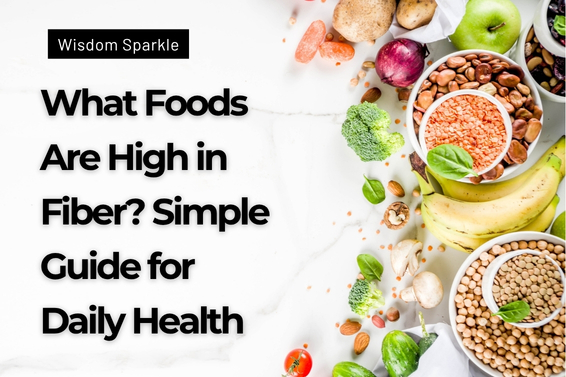
What Foods Are High in Fiber?
Now let’s talk about the most important part — fiber-rich foods.
1. Fruits
Fruits are one of the easiest ways to get fiber.
Best high-fiber fruits:
- Apple (with skin)
- Banana
- Orange
- Pear
- Guava
- Papaya
Simple tip:
Always try to eat fruits with their skin (when possible) because most fiber is in the skin.
2. Vegetables
Vegetables are full of fiber and very healthy.
High-fiber vegetables:
- Carrot
- Broccoli
- Spinach
- Cabbage
- Beetroot
- Green peas
Simple tip:
Eat vegetables daily for lunch and dinner. Try not to overcook them.
3. Whole Grains
Whole grains are much better than refined foods.
Examples:
- Brown rice
- Oats
- Whole wheat roti
- Quinoa
- Barley
Simple tip:
Replace white bread and white rice with whole grains.
4. Legumes (Dal & Beans)
These are very rich in fiber and protein.
Best options:
- Lentils (dal)
- Chickpeas (chana)
- Kidney beans (rajma)
- Black beans
Simple tip:
Include dal or beans in your daily meals.
5. Nuts and Seeds
Small but very powerful foods.
High-fiber options:
- Almonds
- Walnuts
- Chia seeds
- Flax seeds
Simple tip:
Eat a small handful daily as a snack.
6. Dry Fruits
Dry fruits also contain fiber.
Examples:
- Dates
- Figs (anjeer)
- Raisins
Simple tip:
Eat in small amounts because they are high in sugar.
7. Fiber-Rich Indian Foods
If you prefer Indian meals, you can easily get fiber from:
- Roti (whole wheat)
- Dal
- Sabzi
- Sprouts
- Poha with vegetables
- Upma with vegetables
You don’t need fancy food — simple home food is enough.
How Much Fiber Do You Need Daily?
A simple idea:
- Adults need around 25–35 grams of fiber per day
But most people don’t get enough.
Signs You Are Not Getting Enough Fiber
Your body may give signs like:
- Constipation
- Bloating
- Feeling hungry again and again
- Low energy
If you notice these, try increasing fiber in your diet.
Easy Ways to Add Fiber to Your Daily Diet
You don’t need to change everything at once. Start small.
Morning:
- Eat fruits
- Try oats or whole grain breakfast
Afternoon:
- Add salad with your lunch
- Eat dal or beans
Evening:
- Snack on nuts or fruits
Night:
- Eat vegetables and roti
Important Tips While Eating Fiber
1. Drink Water
Fiber works best with water. Drink enough water daily.
2. Increase Slowly
Don’t suddenly eat too much fiber. Increase slowly to avoid discomfort.
3. Keep It Balanced
Don’t depend on only one food. Eat a variety of fiber foods.
Benefits You Will Notice
If you start eating enough fiber, you may notice:
- Better digestion
- Less constipation
- Feeling light and active
- Better weight control
- Healthy skin
Small changes can give big results.
Common Mistakes to Avoid
- Eating too much junk food
- Skipping fruits and vegetables
- Drinking less water
- Eating only refined foods (like white bread)
Try to avoid these habits.
Simple Daily Fiber Meal Example
Here is a simple daily plan:
Breakfast:
Oats + banana
Lunch:
Roti + dal + sabzi + salad
Snack:
Fruits or nuts
Dinner:
Light roti + vegetables
Very simple and easy
When to Talk to a Doctor?
Fiber is safe for most people, but talk to a doctor if:
- You have stomach pain often
- You have long-term digestion issues
- You are unsure about your diet
Final Thoughts
Fiber is one of the most important parts of a healthy diet, but many people ignore it.
The good thing is — you don’t need expensive food.
Simple foods like:
- Fruits
- Vegetables
- Dal
- Roti
- Nuts
are enough to give your body the fiber it needs.
Start with small changes, and slowly build healthy habits.