
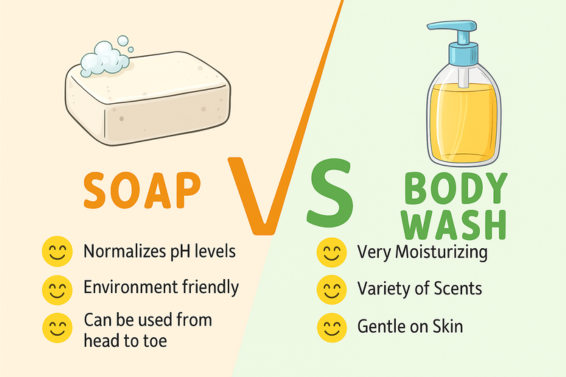
When it comes to keeping our skin clean, most of us reach out for two common options – soap or body wash. Both are made to wash away dirt, sweat, and oil, leaving us feeling fresh. But when you stand in front of the bathroom shelf, looking at a bar of soap in one hand and a fancy bottle of body wash in the other, you may wonder – Which one is actually better for my skin?
This is not just a small choice. The kind of cleanser you use every day affects how your skin looks and feels in the long run. For example, if your skin often feels tight and dry after a bath, the problem may not be the water – it could be your soap. On the other hand, if you feel that your skin never feels “clean enough,” maybe your body wash is too mild.
We all dream of having healthy, soft, and glowing skin. But glowing skin doesn’t just come from creams, lotions, or makeup – it starts with the right cleansing step. If that step goes wrong, no matter how much moisturizer or skincare you use later, your skin won’t feel its best.
That’s why choosing between soap vs body wash is more important than it looks. It’s not about following a trend or buying the most expensive product. It’s about listening to your skin’s needs and giving it the right kind of care.
So let’s take a closer look at the battle of soap vs body wash in simple, clear, and easy-to-understand words, without confusion. By the end, you’ll know exactly which one your skin will thank you for.
What Is Soap?
Soap is something we all grew up using. It usually comes in a solid bar form and is made by mixing fats or oils with an alkali. This process is called saponification. It may sound like a big word, but it’s simply how soap is created to give us that cleansing effect.
- Soap is designed to remove dirt, oil, and germs from the skin. When you lather it up, the bubbles trap dirt and grease, which get washed away with water.
- It gives that squeaky-clean feeling after a bath, which many people love because it feels fresh and crisp.
- Today, soaps come in many varieties – antibacterial soaps that fight germs, herbal soaps with natural ingredients like neem and tulsi, moisturizing soaps with milk or butter, and fragrance-based soaps that make you smell fresh.
For many people, soap is not just a product but a daily habit passed down from generations. Almost every household has used soap for decades. It’s simple, effective, and always available.
Another reason soap is popular is that it is affordable. A single bar can last for weeks, making it a budget-friendly choice compared to liquid cleansers. Plus, it is easy to store – no need for bottles, pumps, or loofahs. You just place it on a soap dish, and it’s ready whenever you need it.
Soap is also long-lasting because you only use as much as you rub on your skin. Unlike body wash, which sometimes gets poured out in excess, a soap bar controls itself.
And let’s not forget – many traditional soaps also have a nostalgic value. That familiar smell of sandalwood, rose, or neem soap often reminds us of childhood. For some, the scent of a certain soap feels like home.
What Is Body Wash?
Body wash is a liquid cleanser that works almost the same way as soap, but the texture and formula are quite different. Instead of being a hard bar, it comes in a liquid form, usually packed inside bottles or pump containers, which makes it easier to use and more hygienic.
- It is usually packaged in bottles of different sizes, and many even come with pump tops that make them easy to use in the shower.
- Body wash creates a rich foam when mixed with water, especially if used with a loofah or sponge. This foam spreads easily across the skin, covering larger areas faster than soap.
- Most body washes are made with extra moisturizing ingredients like aloe vera, shea butter, cocoa butter, glycerin, and essential oils. These not only clean the skin but also lock in hydration.
- They are generally gentler compared to many traditional soaps, making them a good option for people with sensitive or dry skin.
Another reason people love body wash is the luxury factor. It feels like a pampering experience – the smooth texture, the bubbly lather, and the refreshing fragrances often give a spa-like feel at home. That’s why many people see body wash as a modern, skin-friendly choice.
Unlike soap, body wash also allows customization. There are different formulas made for different skin needs. For example:
- Hydrating body washes for dry skin.
- Oil-control body washes for oily skin.
- Soothing body washes with oat extract or chamomile for sensitive skin.
- Exfoliating body washes with scrubbing beads or natural extracts for removing dead skin.
Body wash is also considered more hygienic because no one else’s hands touch the liquid inside the bottle. With soap bars, especially in shared bathrooms, multiple people may use the same bar, which can transfer germs.
However, one thing to keep in mind is that body washes come in plastic bottles, which may create more packaging waste compared to a simple soap bar. But many brands are now switching to recyclable packaging to solve this issue.
So overall, body wash is like the modern upgrade of soap – gentle, moisturizing, hygienic, and made for people who want soft, smooth, and hydrated skin.
How Do They Work on the Skin?
Both soap and body wash aim to clean your skin, but they do it differently.
- Soap: Removes oil and dirt strongly. But some soaps can also remove natural oils that protect the skin, leaving it dry.
- Body Wash: Cleans the skin but usually contains ingredients that also lock in moisture. This makes it less harsh.
So, if you have dry or sensitive skin, body wash may feel gentler, while soap may feel a bit rough.
Benefits of Using Soap
- Cost-Effective – Soap bars are cheaper than body washes and last longer.
- Strong Cleaning – Soap gives a very deep and squeaky clean, which is good if your skin gets oily or sweaty.
- Easy to Store – Soap bars don’t need extra space and can be kept anywhere.
- Travel-Friendly – No chances of spilling like liquid cleansers.
- Variety of Options – From neem and turmeric soaps to fragrant ones, you have plenty of choices.
Disadvantages of Soap
- Dryness – Many soaps strip away natural skin oils, leaving the skin tight and dry.
- Harsh Ingredients – Some soaps contain strong chemicals or artificial fragrance that may irritate sensitive skin.
- Hygiene Issues – Soap bars are shared by family members, which may transfer bacteria.
- Not Always Skin-Specific – Soaps usually don’t target special needs like extra hydration or sensitive skin care.
Benefits of Using Body Wash
- Gentle on Skin – Most body washes are designed with moisturizing elements.
- More Hygienic – Since it comes in a bottle, no one else’s hands directly touch the product.
- Custom Options – There are body washes for dry skin, oily skin, acne-prone skin, and even sensitive skin.
- Better Hydration – Ingredients like aloe vera, glycerin, and oils help to keep skin soft.
- Luxurious Feel – Body wash creates more foam, has a smoother texture, and often feels more pampering.
Disadvantages of Body Wash
- Costlier – Body washes are more expensive than soaps.
- Runs Out Faster – Because of its liquid form, you end up using more product each time.
- Packaging Waste – Plastic bottles can add to environmental waste.
- Too Much Fragrance – Some body washes are overloaded with perfumes, which may not suit sensitive skin.
Soap vs Body Wash: Which One Is Better for Different Skin Types?
Your skin type decides whether you should use soap or body wash. Let’s break it down:
1. Dry Skin
- Better Choice: Body Wash
- Why? Because body washes usually have moisturizing agents that prevent dryness. Soap may strip natural oils, making dryness worse.
2. Oily Skin
- Better Choice: Soap
- Why? Soap gives a deep clean and helps remove excess oil, making oily skin feel fresh.
3. Sensitive Skin
- Better Choice: Body Wash
- Why? Gentle body washes are free from harsh chemicals and fragrances, reducing irritation.
4. Normal Skin
- Better Choice: Both
- Why? If you have balanced skin, you can use either. Just choose one that feels comfortable.
5. Acne-Prone Skin
- Better Choice: Body Wash with Salicylic Acid or Tea Tree
- Why? Special body washes help fight body acne without being too harsh. Soap may irritate acne.
Other Things to Consider
- Climate
- In winter, body wash is better because it prevents dryness.
- In summer, soap can feel fresher and cleaner.
- In winter, body wash is better because it prevents dryness.
- Lifestyle
- If you sweat a lot (gym, outdoor work), soap gives that squeaky clean.
- If you have long working hours indoors, body wash keeps your skin soft.
- If you sweat a lot (gym, outdoor work), soap gives that squeaky clean.
- Budget
- Soap is more pocket-friendly.
- Body wash is a bit fancy but comes with extra care.
- Soap is more pocket-friendly.
Tips for Choosing the Right One
- Always check the ingredients. Avoid too many artificial chemicals.
- If you have allergies, go for fragrance-free versions.
- For kids, gentle body washes or mild soaps are best.
- Don’t forget to moisturize after a bath, no matter what you use.
Which One Is More Hygienic?
When we talk about cleanliness, it’s not just about how well a product cleans the skin – it’s also about how safe and hygienic the product itself stays over time.
- Soap Bars:
Soap bars are used directly on the skin, and in many families, one bar is shared by multiple people. If the soap stays wet in the dish, it may hold on to water and create a thin film where bacteria can grow. That’s why some people believe soap is not hygienic.
But here’s the truth – soap itself is not dirty. If you keep the soap in a dry, well-drained soap dish, and rinse the surface before using it, it remains safe to use. The outer layer may hold some germs, but they get washed away as soon as you rinse it. The real problem comes only when the soap bar is left in a puddle of water or used by many people without care. - Body Wash:
Body wash, on the other hand, is stored in a bottle. Since no one directly touches the liquid inside, it is naturally more hygienic. Every time you pump or pour, you get a fresh amount of product that has not been exposed to air or hands. This makes it a safer choice in shared bathrooms or public places.
Another factor is the application method. Soap is usually rubbed directly on the body, while body wash is applied using a loofah, sponge, or hands. Loofahs, if not cleaned regularly, can also collect bacteria and mold, which then transfer to the skin. So even though body wash feels more hygienic, it’s important to wash or replace loofahs frequently to avoid skin problems.
In short:
- Soap is hygienic if stored properly and rinsed before use.
- Body wash is more hygienic by design, but the loofah or sponge you use with it needs extra care.
So hygiene is less about the product itself and more about how you store and use it.
Eco-Friendly Aspect
- Soap usually comes with less packaging (just paper or a box).
- Body wash mostly comes in plastic bottles, which is less eco-friendly unless the bottles are recyclable.
So, if you care about the environment, soap may be a greener choice.
Final Comparison Table
|
Feature |
Soap |
Body Wash |
|
Price |
Cheaper |
Costlier |
|
Moisturizing |
Low |
High |
|
Skin Type |
Oily/Normal |
Dry/Sensitive |
|
Hygiene |
Shared use |
More hygienic |
|
Eco-Friendly |
Less packaging |
More packaging waste |
|
Travel |
Easy to carry |
May spill |
So, Which One Should You Choose?
There is no single winner in the battle of soap vs body wash. Both have their own strengths and weaknesses, and the “better” choice depends on your skin type, budget, and lifestyle.
- If you want a budget-friendly option that gives a strong, squeaky-clean feel, then soap is the right choice. It’s simple, long-lasting, and does the job well, especially for oily skin or in hot and humid weather.
- If you want soft, hydrated, and pampered skin, then body wash is better. It’s gentle, moisturizing, and feels like a mini spa experience every time you shower.
But here’s something important – your skin can change with time and seasons. For example:
- In summers, you may prefer a refreshing soap because it removes sweat and oil more effectively.
- In winters, body wash can be a lifesaver because it keeps your skin from drying out.
- If you’re someone who works outdoors a lot, soap may feel fresher.
- If you spend long hours indoors in AC rooms, body wash may help keep your skin nourished.
Also, your choice doesn’t have to be strictly one or the other. Many people keep both soap and body wash at home and use them depending on their mood, skin condition, or the weather. For example, you can use soap after a workout when you’re sweaty, and body wash at night when you want to relax and treat your skin gently.
Listen to your skin. If your skin feels tight, itchy, or flaky after using soap, switch to a body wash. If your body wash feels too mild and you don’t feel “fully clean,” try soap again. Skin care is not about blindly following trends – it’s about noticing how your own skin reacts.
At the end of the day, clean, healthy skin is the goal, whether you reach it through soap or body wash. Both can work wonderfully if chosen wisely and used correctly.