
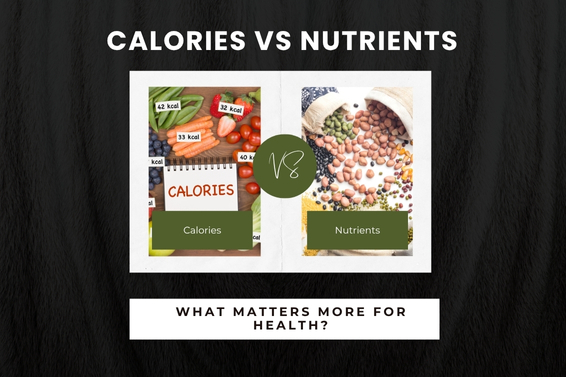
When we talk about eating healthy, a common question is—should I care more about how many calories I eat or what kind of nutrients are in my food?
Almost everywhere you look—whether it’s diet charts, health apps, or weight loss plans—you’ll see people talking about calories. Some even treat calories like enemies, constantly trying to eat less and burn more. On the other side, you’ll find nutritionists and health experts saying, “Don’t just count calories—count nutrients!”
So, it’s easy to get confused.
Which is more important: eating fewer calories or choosing healthier foods?
Will eating a low-calorie meal always make you healthier?
What does your body really need?
Let’s understand all this in the most simple and honest way—just like a friend would explain it over a cup of tea.
What Are Calories, Really?
Calories are not something to be afraid of. In fact, we all need them—every single day.
A calorie is a unit of energy. Just like a car runs on fuel, your body runs on calories from food to stay active and do everything it needs to do.
- Walk and move
- Think and focus
- Breathe and digest
- Keep your heart beating
- Repair your cells and organs
Everyone doesn’t need the same amount of calories. Some people need more, some need less. It depends on:
- Your age (kids and teens need more for growth)
- Your gender (men usually need slightly more)
- Your body size and height
- Your activity level (an athlete will need more than someone with a desk job)
- Your overall health condition (illness, pregnancy, etc. affect this too)
➡️ For example:
A 30-year-old woman who works in an office and does light walking may need around 1,800–2,000 calories a day.
A 25-year-old man who works out daily may need 2,500–3,000 calories.
Yes, calories are important—but what you eat to get those calories matters even more.
You can eat 2,000 calories of junk food or 2,000 calories of nourishing food. Your body will feel and function very differently depending on what you choose.
What Are Nutrients and Why Do They Matter?
Now here’s where things really get interesting.
Nutrients are the essential elements in food that keep your body alive and healthy. Think of them as the real “ingredients” your body needs to:
- Grow
- Heal
- Stay strong
- Fight off diseases
- Stay energized
There are two main types:
✅ 1. Macronutrients – Needed in bigger amounts:
- Carbohydrates: Give you energy (like rice, bread, fruits)
- Proteins: Help build muscles, skin, blood (like eggs, lentils, chicken)
- Fats: Give energy, support hormones and brain (like nuts, seeds, ghee)
✅ 2. Micronutrients – Needed in smaller amounts but super important:
- Vitamins (like A, B, C, D, E, K) – Help with immunity, skin, eyes, etc.
- Minerals (like iron, calcium, magnesium, potassium) – Help with bones, nerves, blood pressure, and more
👉 You may eat enough calories and still feel tired, weak, or sick if your meals lack nutrients.
On the other hand, even if you eat slightly fewer calories, but eat foods rich in nutrients, your body feels nourished, energized, and balanced.
📝 Let’s Take a Simple Example:
Imagine two meals:
Meal A:
- 2 packets of chips
- A glass of cola
- A slice of cake
➡️ Total: 800 calories
➡️ Nutrients: Very low. Mostly sugar, unhealthy fats, and salt.
Meal B:
- 1 boiled egg
- 1 bowl of dal
- A small salad with lemon
- 1 roti or small bowl of rice
- A fruit (like apple or banana)
➡️ Total: 800 calories
➡️ Nutrients: High in protein, fiber, vitamins, and minerals.
See the difference? Both meals give the same energy, but Meal B actually feeds your body.
🔍 Why Counting Only Calories Can Be Misleading
We often hear people say things like:
- I’m only eating 1,200 calories a day—why am I still not losing weight?
- “I skipped lunch to save calories.”
- “This energy drink says zero calories—it must be healthy!”
But here’s the truth: Calories only tell part of the story.
Let’s go deeper into why focusing only on calories can be risky:
❌ 1. You Might Miss Out on Nutrition
Many low-calorie foods—like soda, packaged snacks, or sugar-free treats—are made up of empty calories. That means they provide energy to your body but don’t offer any important vitamins, protein, or minerals.
➡️ So, eating fewer calories might make your body feel tired or get sick more often.
❌ 2. It Can Lead to Low Energy and Mood Swings
If your body doesn’t get enough nutrients—especially iron, B vitamins, and healthy fats—you can feel tired, cranky, or even depressed.
Ever tried a low-calorie crash diet and felt drained all day? That’s why.
❌ 3. It Slows Down Your Metabolism
When you eat too few calories, your body thinks you’re in trouble—like it’s facing a food shortage. It slows your metabolism to conserve energy. So in the long run, your body burns fewer calories, making it harder to lose weight.
🌱 Why Nutrient-Dense Food Should Be Your Focus
Now imagine eating foods that are full of nutrients. Not just energy, but vitamins, fiber, protein, healthy fat—all the good stuff your body needs to feel alive and glowing!
These foods help:
- Boost your immunity
- Give you stable energy
- Improve skin and hair
- Build strong bones and muscles
- Support your heart and brain health
And the best part? You’ll feel fuller for longer and won’t feel the need to snack every hour.
🥦 Examples of Nutrient-Dense Foods
Here are some everyday foods that are rich in nutrients:
|
Food |
Nutrients |
|
Spinach |
Iron, Vitamin C, Fiber |
|
Eggs |
Protein, Vitamin B12, Healthy Fat |
|
Almonds |
Vitamin E, Magnesium, Good Fats |
|
Sweet Potato |
Fiber, Vitamin A, Potassium |
|
Lentils (Dal) |
Protein, Iron, Fiber |
|
Curd/Yogurt |
Calcium, Probiotics, Protein |
|
Fruits (like Papaya, Apple) |
Fiber, Antioxidants, Vitamins |
You don’t need to buy fancy healthy foods. Even basic home-cooked Indian meals can be extremely nutritious if you choose wisely.
🍴 How to Create a Balanced Meal (Calories + Nutrients)
Let’s break it down using a simple plate:
- Half the plate: Vegetables (like spinach, beans, carrots)
- One-quarter: Protein (dal, eggs, paneer, chicken)
- One-quarter: Healthy carbs (roti, brown rice, millets)
- Add-ons: A spoon of ghee or nuts for healthy fat, and a fruit on the side
This way, you’re not only eating calories—you’re feeding your body real goodness.
🧠 Listen to Your Body, Not Just the Numbers
Your body is smart. It’s always giving you a message.
- Feeling tired often? Maybe you’re low on iron or B12.
- Hair fall or dull skin? Could be a sign of protein or vitamin deficiency.
- Craving sugar? Maybe your body’s low on energy or magnesium.
- Always hungry? You may be eating foods with little nutrition that leave you feeling unsatisfied.
Don’t ignore these signals. Don’t only pay attention to the part that says ‘150 calories.
Instead, ask yourself:
👉 “Will this food nourish me or just fill me?”
🔁 Can You Lose Weight by Focusing on Nutrients?
Yes! In fact, focusing on nutrients is one of the most sustainable ways to lose weight and stay healthy.
Here’s why:
- High-fiber foods keep you full for longer
- Protein-rich meals reduce cravings
- Balanced meals keep blood sugar stable
- Whole foods support your metabolism and digestion
And the best part? You don’t feel like you’re dieting. It’s like you’re finally treating your body the way it should be treated.
❤️ Food Is More Than Numbers—It’s Nourishment
Somewhere along the way, we turned food into a math problem. Calories in, calories out. Food is more than just something to fill your stomach.
- It’s energy.
- It’s comfortable.
- It’s culture.
- It’s healing.
You don’t have to fear calories. Your body is the only place you truly live—respect it.
✅ Simple Everyday Tips for Nutrient-Rich Eating
Little things you do each day can create big changes.
- Add a vegetable to every meal – Even a small kachumber salad helps.
- Snack on nuts or fruit instead of chips or biscuits.
- Replace white rice sometimes with brown rice or millets.
- Cook at home more often – It’s easier to control both calories and nutrients.
- Drink water first when you feel hungry – Sometimes it’s just thirst.
- Don’t miss your meals – it can make you feel extra hungry later and cause you to eat too much.
- Add seeds to your food – Like flax seeds or sunflower seeds in chutneys or salads.
🧡 Final Thoughts: Choose Nourishment Over Numbers
If you remember just one thing from this blog, let it be this:
“Calories give you energy, but nutrients truly nourish you.”
Don’t get trapped in the calorie-counting cycle. Instead, build a loving relationship with food. One that respects your body, listens to your hunger, and supports your health.
Eat for strength, not just size.
✨ A Gentle Reminder
Health is not about being skinny.
It’s not about skipping meals.
When you feel happy and healthy inside, it shows on your face and in your actions.
Calories matter, yes—but nutrients matter more.
Choose wisely. Your body will thank you.