
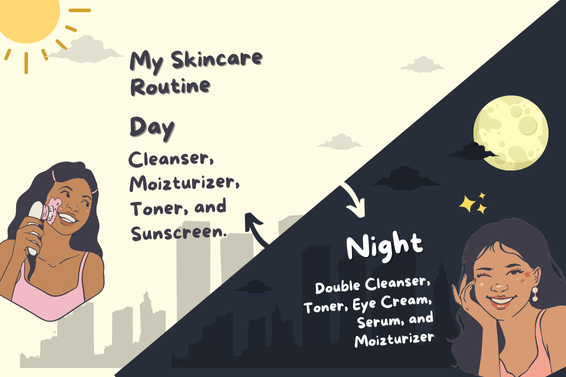
Your skin is like a living, breathing part of your body—it’s constantly working, even when you’re not paying attention. And just like your body has different needs throughout the day, so does your skin. Think about it: in the morning, you need a boost to wake up—maybe a strong cup of coffee, some fresh air, or a warm shower. At night, you crave something calming—a cozy blanket, soft music, and time to unwind.
Your skin is no different. During the day, it battles against the sun, pollution, dust, and stress. At night, it finally gets a break—a chance to relax, heal, and repair. That’s why your morning skincare routine should focus on protection, and your night routine should focus on recovery.
Still, many people either follow the same routine both times or skip one altogether. The truth is, you don’t need a shelf full of fancy products or spend hours in the mirror. You just need to understand what your skin needs—and when it needs it.
In this blog, we’ll explain the real difference between morning and night skincare regimes. We’ll keep it super simple, break down what to use and why, and show you how to build a routine that actually fits your lifestyle—no matter how busy you are.
So grab a cup of tea or coffee (depending on your time of day!) and let’s dive in.
Why Skincare Routines Should Be Different
You may wonder—why even bother with two routines? Isn’t one enough?
Here’s the thing:
- In the morning, your skin needs protection from sunlight, pollution, and dirt.
- At night, it needs help to recover and repair from everything it faced during the day.
So, your morning routine is like a shield, and your night routine is like a repair kit.
Morning Skincare Routine: What It Needs
Consider your morning ritual to be your skin’s protective armor. It protects your face from all the outside elements.
1. Cleanser (Light & Refreshing)
In the morning, your skin doesn’t need a strong face wash — just something gentle to refresh it. You just need something gentle to remove oil or sweat from overnight.
Look for:
- Gel or foam cleansers
- Something hydrating and soft
Tip: Avoid harsh scrubs in the morning. Your skin doesn’t need to be scrubbed clean—it just needs a fresh start.
2. Toner (Balancing Your Skin)
Toners help balance your skin’s pH and prep it for the next steps.
Choose based on skin type:
- Oily skin: use a mild, water-based toner.
- Dry skin: try hydrating toners with rose water or aloe
3. Serum (Vitamin C is Your Friend)
Vitamin C serum in the morning transforms your day. It protects your skin from pollution and helps fade spots over time.
Why Vitamin C?
- Brightens dull skin
- Protects your body from harmful stuff in the air, like pollution!
- Works well under sunscreen
4. Moisturizer (Hydration is Key)
Even if you have oily skin, you should never skip moisturizer. It locks in hydration and keeps your skin smooth.
For oily skin: gel-based moisturizers
For dry skin: cream-based moisturizers
5. Sunscreen (Your Skin’s Superhero)
This is the most crucial part of your morning routine.
Why it matters:
- Protects from sun damage
- Prevents premature aging
- Keeps dark spots away
Use at least SPF 30, even indoors.
Summary of Morning Routine:
- Cleanser
- Toner
- Vitamin C Serum
- Moisturizer
- Sunscreen
You’re all set to face the day!
Night Skincare Routine: What It Needs
At night, your skin goes into recovery mode. It repairs damage and builds new cells. Your role is to provide it with the appropriate tools.
1. Cleanser (Deep but Gentle)
At night, cleansing is super important to remove dirt, oil, sunscreen, and makeup.
Double cleansing is a great habit:
- Begin with an oil-based cleanser to gently remove makeup and sunscreen from your skin.
- Next, use a gentle water-based face wash to remove any leftover dirt and oil from your skin.
2. Toner (Soothing or Exfoliating)
Use a calming toner to refresh your skin. If you use exfoliating toners (like ones with glycolic acid), use them just 2–3 times a week.
3. Serum (Repair Ingredients)
At night, you can apply stronger, treatment-specific serums.
Popular night serums:
- Retinol: great for aging and acne
- Hyaluronic Acid: deep hydration
- Niacinamide: helps reduce pores and smooth skin
Note: To avoid sun sensitivity, use retinol during your nighttime skincare routine.
4. Eye Cream (Optional but Helpful)
If you have tired-looking eyes, puffiness, or dark circles, night is the best time to treat them.
Use a light eye cream and gently tap it with your ring finger—no rubbing!
5. Moisturizer or Night Cream
Night moisturizers are usually thicker. They lock everything in and allow the skin to heal overnight.
Look for:
- Ceramides
- Peptides
- Shea butter (for dry skin)
6. Facial Oil (Only if Needed)
If you have very dry skin, a few drops of facial oil on top of your moisturizer can give that extra boost.
Summary of Night Routine:
- Double Cleanser
- Toner
- Treatment Serum
- Eye Cream
- Moisturizer/Night Cream
- Facial Oil (optional)
Key Differences at a Glance
Step | Morning | Night |
Main Focus | Protection | Repair and Recovery |
Cleanser | Light & Refreshing | Deep or Double Cleanse |
Serum | Vitamin C | Retinol / Hydrating Serums |
Moisturizer | Light & Day Cream | Rich / Night Cream |
Extra Steps | Sunscreen | Eye Cream, Facial Oil |
Active Ingredients | Protective (like antioxidants) | Stronger (like acids, retinol) |
Which Routine is More Important?
Both are important in their own way.
- Morning protects your skin from the environment.
- Night helps your skin heal and renew.
Skipping either one can affect your skin’s health. Even a basic version of both routines will go a long way.
Simple Routine for Beginners (Morning + Night)
If you’re just starting out, here’s a basic setup:
Morning:
- Gentle Cleanser
- Moisturizer
- Sunscreen
Night:
- Cleanser
- Moisturizer
Start simple, then build up. Don’t overwhelm your skin with too many products too fast.
Common Mistakes to Avoid
- Skipping sunscreen thinking you’re indoors – UV rays still come through windows!
- Overusing strong ingredients – More isn’t better. Stick to one active component at a time.
- Not removing makeup properly – This can clog pores and cause breakouts.
- Changing products too quickly – Give each product at least 2–3 weeks.
- Using morning products at night and vice versa – Ingredients like Vitamin C and Retinol have specific timings.
Bonus Tips for Healthy Skin
- Drink 7–8 glasses of water every day.
- Get at least 7 hours of sleep.
- Clean your pillowcase weekly.
- Don’t touch your face too often.
- Avoid using expired products.
Understanding Skin’s Natural Clock (Circadian Rhythm)
Your skin actually follows something called a circadian rhythm—your body’s 24-hour internal clock.
- During the day, your skin’s barrier tightens to protect you.
- At night, the barrier relaxes, and skin becomes more absorbent and ready to heal.
That’s why some active ingredients (like retinol or acids) work better at night—they’re absorbed more efficiently.
And that’s also why night creams are richer and more focused on repair while day creams are lighter and protective.
Products to Use Morning vs. Night (With Advantages)
Let’s break it down clearly:
Ingredient | Use When? | What It Does |
Vitamin C | Morning | Brightens skin, protects against pollution |
Niacinamide | Both | Reduces inflammation, strengthens skin barrier |
Retinol | Night | Boosts cell turnover, targets wrinkles/acne |
Hyaluronic Acid | Both | Hydrates deeply, plumps skin |
SPF (Sunscreen) | Morning | Shields skin from UV damage |
AHA/BHA (Exfoliants) | Night | Removes dead skin, smooths texture |
Peptides | Night | Supports skin repair and collagen production |
Use ingredients wisely, and don’t mix everything at once. Let your skin breathe and absorb slowly.
How to Layer Products the Right Way (Morning & Night)
Sometimes people say, “I applied everything but still got a breakout!” Most of the time, the issue is not the product—but the order of application.
Here’s the golden rule: Light to heavy. That means watery products go first, thick ones later.
Morning Layering Order:
- Cleanser
- Toner
- Serum (e.g., Vitamin C)
- Moisturizer
- Sunscreen
Night Layering Order:
- Cleanser (or Double Cleanse)
- Toner
- Treatment serum (e.g., Retinol)
- Eye cream
- Night cream or moisturizer
- Facial oil (if needed)
Wait 30 to 60 seconds after applying one product before using the next, so your skin has time to absorb it properly.
Morning and Night Skincare Tips for Every Skin Type
Everyone’s skin is different. Knowing your type helps you choose the right ingredients and build a routine that works for you.
🔹 Oily Skin
- In the morning, wash your face with a foaming cleanser, apply a light oil-free moisturizer, and finish with a gel-based sunscreen.
- Night: Try salicylic acid serum or niacinamide. Avoid heavy creams.
🔹 Dry Skin
- Morning: Use a creamy cleanser, hydrating toner, and thick moisturizer.
- Night: Add hyaluronic acid and facial oil.
🔹 Sensitive Skin
- Morning: Gentle, fragrance-free products. No harsh actives.
- Night: Use calming ingredients like aloe vera, oat extract, or ceramides.
🔹 Combination Skin
- Morning: Balance with gel cleanser, lightweight moisturizer, and SPF.
- Night: Spot treat oilier zones with exfoliants and hydrate dry areas more.
Frequently Asked Questions (FAQs)
Is it okay to use the same skincare products in the morning and at night?
Yes, some basics like a gentle cleanser or moisturizer can be used for both. But activities like Vitamin C (for morning) and Retinol (for night) should be time-specific.
I have no time! What’s the simplest routine I can follow?
Basic is fine as long as it’s consistent:
- Morning: Cleanser, Moisturizer, Sunscreen
- Night: Cleanser, Moisturizer
What if I miss a night routine?
It’s okay! Don’t stress. Simply get back on course the following day. Skincare is a habit, not a punishment.
Is sunscreen still needed if it’s cloudy or I’m indoors?
Absolutely yes. UV rays penetrate clouds and windows. Use SPF every single day.
Emotional Benefits of Skincare
Skincare is more than just applying products—it’s self-care.
- That 10-minute routine every morning and night can help you pause, breathe, and take care of you.
- A simple face massage while applying cream can release tension.
- Seeing your skin glow over time feels rewarding—it builds confidence.
So don’t think of skincare as a task. Make it a ritual of self-love.
Final Tips Before You Go
Skincare is not about perfection. It’s about treating your skin with the love and attention it needs, both at night and in the morning. With the right timing, the right routine, and a little patience, you’ll not only see changes in your skin but also in how you feel about yourself.
Whether you’re just starting out or refining your routine, remember: every drop, every step, every moment counts.
So take your time, enjoy the process, and treat skincare not as a chore—but as a quiet, personal moment of self-care in your day.
Because at the end of it all—healthy skin isn’t just about looking good. It’s about having confidence in yourself.